 by Greg Palast
 When Dick Cheney and leaders of the energy industry met secretly to fashion U.S. energy policy, progressives were understandably apoplectic. But when President Obama holds secret talks with the health care industry, it's another story. Progressives would be righteously upset if they understood all the wheeling and dealing had only cut 2% from a national health care bill that will double over ten years.
Obama on Drugs: 98% Cheney?
by Greg Palast
“The Obama deal locks in a doubling of drug costs.”
I searched all over the newspapers and TV transcripts and no one asked the President what is probably the most important question of what passes for debate on the issue of health care reform: $80 billion of WHAT?
On June 22, President Obama said he'd reached agreement with big drug companies to cut the price of medicine by $80 billion. He extended his gratitude to Big Pharma for the deal that would, "reduce the punishing inflation in health care costs."
Hey, in my neighborhood, people think $80 billion is a lot of money. But is it?
I checked out the government's health stats (at HHS.gov), put fresh batteries in my calculator and toted up US spending on prescription drugs projected by the government for the next ten years. It added up to $3.6 trillion.
In other words, Obama's big deal with Big Pharma saves $80 billion out of a total $3.6 trillion. That's 2%.
“Obama's promise that we could buy cheap drugs from Canada simply went pffft!”
Hey thanks, Barack! You really stuck it to the big boys. You saved America from these drug lords robbing us blind. Two percent. Cool!
For perspective: Imagine you are in a Wal-Mart and there's a sign over a flat screen TV, "BIG SAVINGS!" So, you break every promise you made never to buy from that union-busting big box - and snatch up the $500 television. And when you're caught by your spouse, you say, "But, honey, look at the deal I got! It was TWO-PERCENT OFF! I saved us $10!"
But 2% is better than nothing, I suppose. Or is it?
The Big Pharma kingpins did not actually agree to cut their prices. Their promise with Obama is something a little oilier: they apparently promised that, over ten years, they will reduce the amount at which they would otherwise raise drug prices. Got that? In other words, the Obama deal locks in a doubling of drug costs, projected to rise over the period of "savings" from a quarter trillion dollars a year to half a trillion dollars a year. Minus that 2%.
We'll still get the shaft from Big Pharma, but Obama will have circumcised the increase.
“Thirteen European nations successfully regulate the price of drugs, reducing the average cost of name-brand prescription medicines by 35% to 55%.”
And what did Obama give up in return for $80 billion? Chief drug lobbyist Billy Tauzin crowed that Obama agreed to dump his campaign pledge to bargain down prices for Medicare purchases. Furthermore,Obama's promise that we could buy cheap drugs from Canada simply went pffft!
What did that cost us? The New England Journal of Medicine notes that 13 European nations successfully regulate the price of drugs, reducing the average cost of name-brand prescription medicines by 35% to 55%. Obama gave that up for his 2%.
The Veterans Administration is able to push down the price it pays for patent medicine by 40% through bargaining power. George Bush stopped Medicare from bargaining for similar discounts, an insane ban that Obama said he'd overturn. But, once within Tauzin's hypnotic gaze, Obama agreed to lock in Bush's crazy and costly no-bargaining ban for the next decade.
What else went down in Obama's drug deal? To find out, I called C-SPAN to get a copy of the videotape of the meeting with the drug companies. I was surprised to find they didn't have such a tape despite the President's campaign promise, right there on CNN in January 2008, "These negotiations will be on C-SPAN."
“Obama agreed to lock in Bush's crazy and costly no-bargaining ban for the next decade.”
This puzzled me. When Dick Cheney was caught having secret meetings with oil companies to discuss Bush's Energy Bill, we denounced the hugger-muggers as a case of foxes in the henhouse.
Cheney's secret meetings with lobbyists and industry bigshots were creepy and nasty and evil.
But the Obama crew's secret meetings with lobbyists and industry bigshots were, the President assures us, in the public interest.
We know Cheney's secret confabs were shady and corrupt because Cheney scowled out the side of his mouth.
Obama grins in your face.
See the difference?
The difference is 2%.
Palast studied healthcare economics at the Center for Hospital Administration Studies at the University of Chicago. Greg Palast's investigative reports can be seen on BBC Television's Newsnight and, in print, at www.GregPalast.com.

 The Ujima People's Progress Party is organizing outside of the duopoly in an effort to gain true political representation for Black working people.
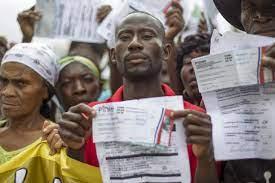 In the Dominican Republic, Haitian migrants or any dark-skinned Black person can be arrested, have their belongings seized, and be deported from that country. Anti-Haitian sentiment and legislation…
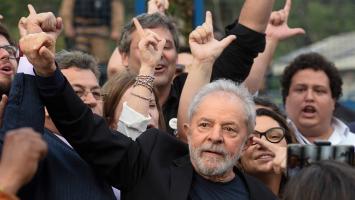 Lula da Silva's return to the Brazilian presidency is seen as a victory for the left. But he will have to struggle against forces who want to continue neo-liberal policies.
 The Black Alliance for Peace AFRICOM Watch Bulletin #43 includes an interview with a representative of the Revolutionary Socialist League of Kenya and as always, the latest analysis and reporting on…
 Frantz Fanon was a fierce critic of the U.S., but he spent the last weeks of his life in Washington DC, where he hoped to be treated for leukemia. Medical care can be used as a political weapon.


