The Racial Politics of Symbols
by Corey D.B. Walker
This article previously appeared in Counterpunch.org.
"Although Senator Obama's nomination represents yet
another first in American political life, it is far from being a fundamental
transformative event"

In
politics, symbols matter. And in a nation with a history of racialized chattel
slavery, state sanctioned discrimination, and an anti-black racialist and
racist culture, political symbols of racial progress matter tremendously.
It is in this context where the effusive praise of the ascendancy of Senator
Barack Obama to the Democratic Party nomination for the presidency of the
United States must be understood. By capturing a major party nomination, Senator
Obama stands as a potent symbol of progress for the American experiment with
democracy that continues to be plagued by its racial past that is still very
much a part of its present.
But to equate the symbolic dimension of Senator Obama's campaign for the
presidency with the substantive standing and status of American democracy is to
commit a serious error.
When one begins to critically examine the contemporary moment in American
democratic development, we should pause in light of several deep and disturbing
trends that have become prominent since the decline of the Black Freedom
struggles of the 1960s. And, since Senator Obama is not running for president
of a union local but for the highest political position in the United States,
it is at the intersection of symbol and substance where we should critically
confront the crisis of democracy in America.
The last eight years of the Bush-Cheney regime is often seen as an anomaly in
contemporary American political development. Perpetual geopolitical and class
warfare has been a hallmark of this regime's politics along with a severe
contraction of institutional accountability and democratic responsibility.
Although the current political regime was able to effectively exploit the
opening presented by the tragic events of 11 September 2001 for the advancement
of their id[th]eological worldview, the option to do so did not appear only at
that moment. The Bush-Cheney regime was able to commence their rogue politics
due to, among other things, the fact that they assumed political power at a
moment in American political life that was deeply structured by the
institutionalization of a conservative political philosophy, the
intensification of neoliberal ideology, the globalization of a vicious
speculative finance capitalism, the massive reorganization of the American
military-industrial complex, and the legitimation of the American
police-incarceral state.
"Perpetual
geopolitical and class warfare has been a hallmark of this regime's politics."
It is this political apparatus and its theoretical infrastructure that we must
critically confront and engage when we assess the potential and substance of
Senator Obama's presidential campaign.
What this means is that we must comprehend how and in what ways the structural
limitations of the political in the United States enforces a severe discipline
on the actions, ideologies, and strategies of politicians and of politics.
Thus, although Senator Obama's nomination represents yet another first in
American political life, it is far from being a fundamental transformative
event of the very institutional and theoretical structure of democracy in
America.
The forces and interests that have molded American
political institutions and culture in the last half of the twentieth century
have created a style of democratic politics that thrives on a low level of
support and involvement by the public while maximizing the power and presence
of capital along with a new class of political intellectuals, technicians, and
elites. Such a low intensity politics thrives on the mobilization of symbols
while marginalizing the life chances of the majority of citizens. It is the
confluence of the (racial) politics of symbols and an ideology of progress that
causes and supports the theoretical and political confusions that inhibit any
formulation of a critique of the crisis of democracy in America.
To be sure, Senator Obama's political philosophy and policy proposals represent
the very centrist positions that have captured the Democratic Party as a response
to the fundamental reorganization of American political life by the
conservatism of capital and culture. For instance, Senator Obama's economic
team is heavily tilted in favor of neoliberal economists and free marketers
who, despite being a bit chastened by the "excesses" of global capitalism over
the past decade, fundamentally believe in the inherent good of free markets,
free flow of capital, and free exercise of business with little or no
government regulation.
"Senator
Obama's economic team is heavily tilted in favor of neoliberal economists and
free marketers."
Despite the smooth veneer offered by the rhetoric of dialogue and diplomacy,
Senator Obama's foreign policy vision is still one wedded to the expansion and
deepening of American Empire. Thus, we should not be surprised when we do not
hear new and progressive pronouncements on Middle East policy - particularly
when such pronouncements lack any deep probing and new ideas regarding the
Isreali-Palestinian conflict - Latin American policy - particularly when such
pronouncements offer only the continuation of the US imperial stance against
Cuba and the desire to thwart the socialist alternative offered by Venezuela -
and US security policy - particularly when such pronouncements are in favor of
increased US troop strength, offer (qualified) support for the option for US
unilateral action, and support for the newest arm of US imperialism in Africa,
Africa Command (AFRICOM).
While the presidential campaign of Senator Obama has elicited responses ranging
from unqualified support by his most fervent supporters to a critical support
offered by some on the left, it has indeed been the symbol of Senator Obama as
a major party presidential candidate that has garnered the most attention and
political commentary in the current presidential election cycle.
"Imperialism," John Bellamy Fosters advises, "is not simply a policy but a
systematic reality." Indeed, symbols matter. But in politics, symbols are not
the only things that matter.
Corey D. B. Walker is
an assistant professor of Africana studies at Brown University and the author
of A
Noble Fight: African American Freemasons and the Struggle for Democracy
in America, which will be published in October.

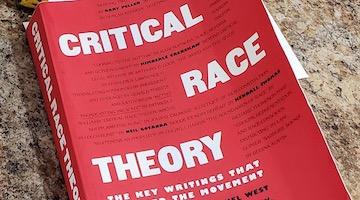 Conservative activists have branded all race reform efforts in education and employment as CRT.
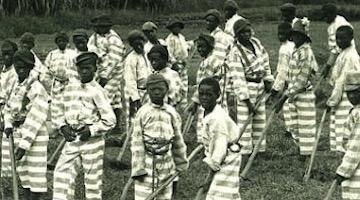 The ‘slavery clause’ made the passage of restrictions targeting Black people like the Black Codes possible as well as convict leasing of the late 19th century.
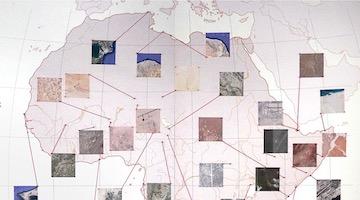 Neither the Organization of African Unity nor the African Union have been able to realize the two most important principles of pan-Africanism: political unity and territorial sovereignty.
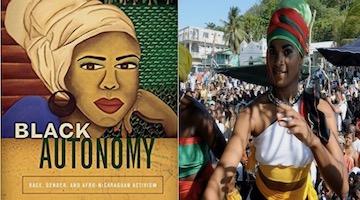 The author examines postwar violence through the activism of Afro-Nicaraguan women and men from the Caribbean coast of the country.
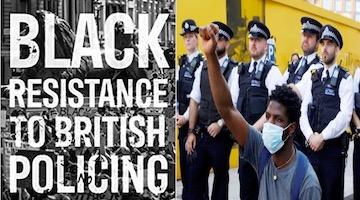 Historically, most of Britain’s policing hasn’t taken place on the British mainland – it has taken place in its colonies.


