Locking Up Surplus American Labor
Is the U.S. A Light Unto the Nations?
by Seth Sandronsky
"We see an irrational economy that more and more requires prison cells for those who have no chance of finding their way onto employers' payrolls."
According to the U.S. Justice Department, the American prison system - by far the largest gulag in the world, housing one of every four prison inmate on the planet - a total of seven percent of U.S. residents are behind bars, or on parole or probation at any given time - about 3 percent of the nation's adult population, or one out of every 32 adults.
About half the nation's inmates - one-eighth of the globe's total - are Black. Nevertheless, the U.S. continues to offer to serve as a "light unto the nations" as a model of social justice. Seth Sandrosky asks the question: Why should any developing country want to follow the U.S. model of criminal justice dispensation? -- The Editors
Does bigger mean better? Yes, for the conventional wisdom on the U.S. economy, the world's largest in terms of output, or gross domestic product. Thomas Friedman of the NY Times is perhaps the leading voice for this view.
Accordingly, citizens of developing nations will prosper if their leaders emulate the U.S. model of growth. Lost a bit in such rhetoric is the fact that the American economy also creates a big labor market surplus. Typically, the likes of Thomas Friedman sidestep this ongoing human tragedy of the grow-or-die U.S. economic model.
"Where do so many American job seekers end up?: Behind bars."
Nevertheless in the U.S., market conditions of supply, demand and capital accumulation do in fact help to generate a surplus of labor. In short, there are too many workers for too few jobs. Where do some of these American job seekers end up?
One answer is: behind bars. According to a recent report by the Justice Department's Bureau of Justice Statistics, there were 2.2 million people held in federal or state prisons in December 2005, a 2.7 percent increase. The average annual increase of the U.S. prisoner population has been 3.5 percent since 1995.
There is a gender dimension of this incarcerated population. The average annual rate of growth for women has been 4.6 percent versus 3 percent for males during the past 10 years.
Moreover, the U.S. prison population is not counted in one of Uncle Sam's employment surveys. There were 7.4 million persons unemployed nationwide in December 2005, according to the U.S. Department of Labor. Now add the 2.2 million incarcerated people for a total jobless figure of 9.2 million.
African American men in their late 20s were locked up at a rate three times that of Hispanic men and over seven times the rate of white men. The numbers for young male prisoners roughly mirror the pattern of the Labor Department's household survey of December 2005 by racial groups, not seasonally adjusted (Tables A-2 and A-3). The jobless rate for black men over age 20 was 8.8 percent versus 5.1 percent for Hispanic men and 3.9 percent for white men.
"Harsh laws that sentence non-violent drug offenders to prison are propelling the rise of the U.S. prison population."
African American females "were more than twice as likely as Hispanic females and over 3 times more likely than white females to have been in prison on December 31, 2005," according to the Justice Department. "These differences among white, black, and Hispanic females were consistent across all age groups." The unemployment rate for white women age 20 and up was 3.4 percent versus 8.1 percent for black women and 6.6 percent for Hispanic women.
Without a doubt, harsh laws that sentence non-violent drug offenders to prison are propelling the rise of the U.S. prison population. At the same time, national minorities of both genders are less likely than their white counterparts to be employed. In short, U.S. prisons are caging surplus workers whose labor the American economy increasingly does not need.
This employment and imprisonment link is not the irrational working of a rational economy. To the contrary, we see an irrational economy that more and more requires prison cells for those who have no chance of finding their way onto employers' payrolls. Why would people of any developing nation wish to emulate the job and prison conditions of the U.S.?
Seth Sandronsky is a member of Sacramento Area Peace Action and a co-editor of Because People Matter, Sacramento's progressive paper www.bpmnews.org/. He can be reached at: bpmnews@nicetechnology.com

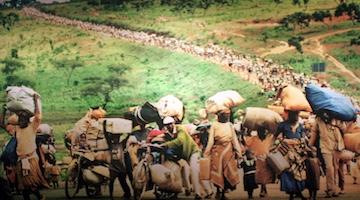 The U.S. kept the U.N. Security Council from sending in troops to stop the 1994 Rwandan Genocide.
 The "transitional council" in Haiti is another part of the plan to maintain the dominance of imperialist forces over the island. This process is driving the nation further into a socioeconomic crisis.
 O.J. Simpson's acquittal in one of the most infamous murder trials of the 20th century was celebrated as a symbolic win for the Black community against an oppressive system. However, O.J. was…
 The Axis of Resistance is shining a light on the reactionary regimes in the region who remain active and willing agents of imperialism.
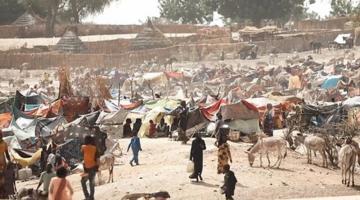 Ending the war in Sudan will require real Sudanese dialogue to carve out a new political course. The people must be wary of a manufactured process, run by a political and economic elite…


