by Seema Sadanandan
Black children in poorer sections of the Nation’s Capitol grow up under constant hyper-surveillance of police. The armed occupation of their communities is anything but benign. “A community’s desire to be free from crime is not an invitation to treat all men in that community as suspects.”
Living Under the Cloud of Stop-and-Frisk in Washington DC
by Seema Sadanandan
This article previously appeared as an op-ed in the Washington Post.
“No matter how well you behave, you will be treated as a suspect.”
“It’s the jump-out cars you have to watch out for,” said a young boy from the back of the crowded room at the Kenilworth Housing Development. He was referring to the Metropolitan Police Department vice squad’s roving, unmarked cars, ubiquitous in most of the District’s black neighborhoods, from which officers jump out and aggressively “stop and frisk” people.
During the past six months conducting “Know Your Rights” trainings and forums, I have heard from hundreds of D.C. residents about their experiences with the police. This time, when I walked into the room at Kenilworth and saw my preteen audience of about 20 boys, I wondered what they could possibly know about police encounters. Quite a lot, it turned out. One youth said he had been chased and tackled. Another had been stopped and frisked. All of the children expressed the belief that they were under police observation whenever they were in a public space. Over the course of the training, it became clear that all of them were well-schooled in the world of heavy-handed policing.
Police Chief Cathy L. Lanier suggests that the added police presence is merely a response to requests for assistance in these communities. This is consistent with a common theme in the national conversation about police practices: that black communities want this type of “protection.” But a community’s desire to be free from crime is not an invitation to treat all men in that community as suspects.
“All of the children expressed the belief that they were under police observation whenever they were in a public space.”
In 1968, the Supreme Court ruled that police can stop and pat down a person if they have an “articulable suspicion” that he or she is armed. This ruling, which has given rise to the practice now known as stop-and-frisk, was intended to make police interactions safer. The doctrine was never intended to replace careful police work and investigations with aggressive and unfounded stops. Such shortcuts come at great cost.
Take Paul, who at 17 years old was a month away from graduation and headed to college on a scholarship. Walking home from his after-school job at the Benning Road library one spring day, he didn’t panic when he saw an unmarked police car approach. But he quickened his step as he approached the door to his building. As he leaned into the door, he heard footsteps behind him. Without being told, he dropped his backpack to the ground and raised his hands above his head.
“Where are you going?” the officers shouted. “Where are you coming from? Where are the weapons and drugs?” He tried to answer but after a continued barrage of questioning, he called for help through the door, shouting, “Mom! Mom!”
Paul then remembered what he’d learned in our training: “I do not consent to any searches,” he told the police. “We aren’t searching you,” the officers replied. Then they rifled through his backpack. Finding nothing, they said, “No hard feelings. You look suspicious.”
When the police approach a young man like Paul, who has spent his life watching the men in his family and neighborhood being questioned and searched, he often will quite reasonably quicken his pace in the hope of avoiding a time-consuming and humiliating confrontation. But the police cite exactly this behavior as a justification for a stop. The lesson learned is that no matter how well you behave, you will be treated as a suspect.
“Nearly every male I’ve talked with expresses severe anxiety about degrading police encounters.”
Make no mistake, members of the communities subjected to this intensive policing have made clear that they want to feel safe, and they want their children to be able to spend time outside without fear. Indeed, I have heard mixed emotions from the members of the black community about the heavy police presence in their neighborhoods. While some feel comforted by their visible presence, nearly every male I’ve talked with expresses severe anxiety about degrading police encounters. This creates a dangerous dynamic that does not make our community safer.
Jump-out cars and indiscriminate stops and searches cannot be the answer. How can we calculate the psychological toll inflicted by these practices or the distrust of the police they sow? For the young men I speak to, these encounters mark a perverse coming of age, rather than a disturbing aberration.
In the years I lived near Benning Road with my family, my children saw more black men in handcuffs than in business suits. Although we tell our kids that they are precious, they are getting a different message from the manner of policing in black neighborhoods. We need a police force that protects us all rather than treating whole communities as if they are destined for prison.
Seema Sadanandan is an organizer for the ACLU of the Nation’s Capital.

 $13 billion aircraft carriers, $10 pencils and $500 hammers, renamed “portable hand-held transcribing devices” and “impact fasteners;” so war-profiteer pimps—war
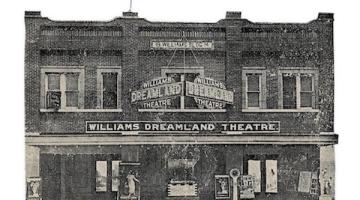 In 1921 thousands of whites attacked the Black population of Tulsa, Oklahoma with machine guns, airplanes, fire and pure hatred, killing at least 300.
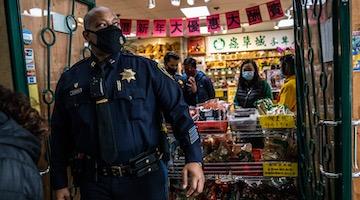 More policing rarely results in justice for anyone, and only puts Black, Indigenous, and other communities of color (BIPOC), including Asian people, at risk for more violence.
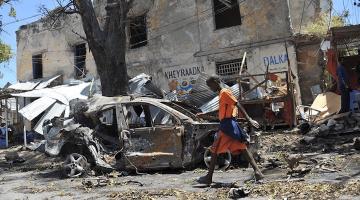 “Bombing Somali civilians is one of AFRICOM’s main projects,” writes Mohamed Haji Ingiriis, a young Somali historian.
 The worldview animating Haitian masses today is leading to a social context ungovernable within the framework of prevailing economic neo-liberalism.


