 From On The Media
When New Orleans flooded in the wake of Hurricane Katrina, patients and doctors at the Memorial Medical Center were stranded without power and facing dwindling supplies of medicine. By the time the ordeal was over, as many as eleven elderly, mostly Black patients were dead – some, it was charged, euthanized by medical personnel.
Katrina Deaths at New Orleans Hospital Revisited
From On The Media
“He asked his nurses, he said: don't let them leave me behind.”
ProPublica’s Sheri Fink won a Pulitzer Prize for her reporting on the story. She was recently interviewed on National Public Radio’s “On The Media” program by host Bob Garfield.
From the interview:
BOB GARFIELD: The story gets particularly chilling as you discuss one patient, a man named Emmett Everett, who was paraplegic and scheduled for some difficult surgery but also alert and actually quite jolly, you know, a day or two before he was, I guess, lethally injected.
DR. SHERI FINK: Mr. Everett was a man in his mid-60s. He had something called a spinal cord stroke, which is very rare, but it left him paraplegic, and also he had grown quite obese. The morning before he died, he had fed himself breakfast. He had no medical complaints that morning, aside from dizziness, according to the medical staff who were interviewed by investigators after these events. And he could hear that morning when the helicopters finally arrived, one after the other, taking people away. He asked his nurses, he said: don't let them leave me behind.
Reportedly, a doctor and two nurses who came up to the seventh floor to discuss the situation of the seven patients who were still there assumed that everybody on that floor was really, really sick and was out of it, was unconscious. And the people who actually cared for those patients, they say they told this doctor, well, we have one patient who doesn't fit that category at all. He's actually alert, but he's quite obese.
And at that point, according to several sources, there was a discussion about could we get Mr. Everett out. The way that the evacuations were working was that patients would have to be walked down the stairways because, of course, there were no elevators, down to a second floor, put through a little hole that was a shortcut into the parking garage, then driven up to the top of the garage, carried up two flights of stairs and then evacuated off the helipad. And they just decided that would just be - not possible.
Dr. Anna Pou who was kind of at the center of these events, because she was arrested and accused of murder, she, according to the witnesses - and Dr. Pou, will not discuss this, of course - but they said that Dr. Pou took these drugs, morphine and Midazolam, and went into Mr. Everett's room, closed the door, and several hours later he was seen by other staff to have died.
(While Emmett Everett was "too big" to evacuate his corpse was not "too big" to hide. All the patients that Memorial staff were accused of killing were carried seven floors to the first floor Chapel before the hospital closed. No state official was notified that there were 31 dead bodies in the Chapel. The district attorney refused charges in all these cases after the New York Times Magazine story.)

 The struggle against systemic racism and the police state in the US is integral and linked to the struggle against US wars of aggression overseas.
 Community control of police and prison abolition have been completely removed from the conversations dictated by a mainstream and complacent narrative.
 Global Displacements is an examination of the impact of the global organization of capitalist accumulation and exploitation on the life and labor of Haitian and Dominica
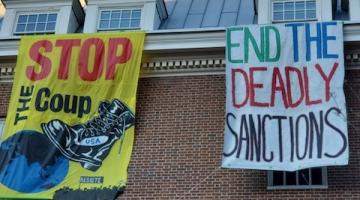 It was agreed that dropping the federal charges and seeking no jail time in return for pleading to a very low-level DC Code charge was an important victory.
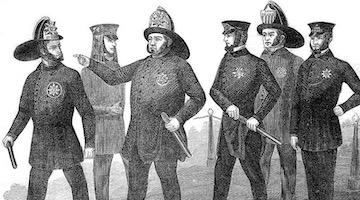 What has recently been condemned as corrupt and brutal policing is actually consistent with historical tradition of localized repression.


