Attorney Jeffrey Haas co-founded Chicago's PLO, the Peoples Law Office, which has represented the victims of political persecution, torture and police misconduct for more than four decades. Haas was lead attorney in the decade-long lawsuit lodged by the families and survivors of the December 4, 1969 raid by the FBI and Chicago Police that took the lives of Black Panthers Mark Clark and Fred Hampton. Haas's new book, the Assassination of Fred Hampton, How the FBI and Chicago Police Murdered A Black Panther is a riveting personal account of how the author's life intersected with the movement of the late 60s and early 70s and with the brief and remarkable life of Fred Hampton, who led the Illinois Chapter of the Black Panther Party.
If you can't see the video above, click here.
Jeff Haas New Book, “The Assassination of Fred Hampton” is a Major Contribution To The Legacy of the Slain Panther Leader
by BAR managing editor Bruce A. Dixon
Along with telling the story of his own political awakening, and tracing the path that led to his involvement with the movement, Haas delivers us a priceless account of Fred Hampton's early life and political evolution drawn from extensive interviews with Fred's parents, siblings, extended family and others. He also offers brief impressions of Panthers and others he encountered along the way. The author sketches something of the day to day work of the Black Panther Party in the political context of those times, enabling us to understand the impact that organization and Fred's brief life of struggle, intensity and sacrifice continues to make on so many.
By the time of the December 4, 1969 murders of Clark and Hampton, Haas was already deeply involved with the Black Panther Party. He recounts being summoned to the Wood Street police station and guarded hospital rooms to interview survivors including Akua Njeri, formerly Deborah Johnson who would would bear Fred Hampton's only child less than two weeks later. He details how police invented and the media willingly disseminated fanstastic stories of an imaginary "shootout" in the Hampton apartment, but hurriedly abandoned the scene of their own crime chock full of damning evidence which ponted to a cold-blooded act of government sponsored murder.
“It's a story almost nobody else is in a position to tell, and Haas does an excellent job of it.”
After their legal team gathered, catalogued and filmed the evidence, some of which is recounted in the feature film, the Murder of Fred Hampton, Chicago Panthers threw the doors of the apartment open to the public. They conducted community leaders and thousands of ordinary citizens on guided tours of the tiny apartment full of physical evidence which made nonsense out of the police tales of a "shootout". Some reporters took the tour as well, and when early newspaper photos of supposed Panther bullet holes turned out to be nail heads that was enough to turn the tide of local black public opinion in the Panthers' favor.
Public opinion was one thing. Exposing the lethal conspiracy and bringing its perpetrators to some measure of justice would be quite another, an epic legal and political battle lasting more than ten years. Jeff Haas was the lead attorney in that long fight. The ins and outs and setbacks and eventual, partial triumph in that battle, during which successive layers of government perfidy, perjury and conspiracy were revealed make up most of the book. It's a story almost nobody else is in a position to tell, and Haas does an excellent job of it.
He generously credits his co-counsels and the invaluable assistance they received from the NAACP Legal Defense and Education Fund, the Center For Constitutional Rights, which in our own day has done more than anyone else to represent the nameless, faceless prisoners in the Bush-Obama global network of secret prisons, the National Lawyers Guild, the ACLU and others at the same time he recounts tactical and strategic differences between some of them on the best way to pursue the case.
But Haas's account is not what you might expect there either. Far from being the standard praise-hymn to the truth-revealing wonderfulness of US jurisprudence, Haas makes it clear that no measure of justice whatsoever would have been acheived in the case were it not for forces exerted by the larger political struggle outside the courtroom.
For years, when Chicago police and prosecutors lied, federal officials backed them up, and the court prohibited further inquiry. When the feds lied, local officials and the court covered their backs. A succession of judges issued bizzare and blatantly contradictory, prejudicial rulings that hamstrung the case of survivors and their families for years.
The biggest single break in the case, according to Haas, came after the US Senate's Church Committee hearings into COINTELPRO and other secret, illegal activities of the CIA, FBI and other government agencies. In the wake of those hearings thousands of previously classified documents were made public, including quite a few whose existence had been specifically denied by federal and local authorities when Haas and the plaintiffs' team requested them. The Church committee files included many references to still other documents, files and persons which trial judges, local and federal authorities agreed did not exist and opened lines of inquiry trial judges had previously declared off limits.
This missing information, this undeniable proof of concealed perjury and conspiracy was only shaken loose by the incessant political tumult of the 60s and 70s, not by the legal team's poise and expertise, and certainly not through the workings of the legal system. It finally enabled the survivors to recover a very modest monetary settlement and their lawyers to prove beyond any doubt the existence of multiple, overlapping conspiracies on the part of Chicago Police, local prosecutors and the FBI to carry out and cover up political murders of US citizens under the COINTELPRO program. The lesson, according to Haas, and this reviewer agrees with him, is that progress comes with unceasing and uncompromising struggle, for which the powers that be often do not furnish any legally sanctioned roadmap or means.
“Fred Hampton's life and work and spirit are part of the heritage of all who are impatient with injustice as he was, and who struggle to end the exploitation of woman and man by man.”
Haas concludes the book with a relevant experience of his own. After the US invasion of Iraq, Haas by then a New Mexico resident, took part in a march on Rumsfeld's estate near Taos NM. As he stood to make a speech near the gate, Haas says, he felt he was doing what Fred Hampton would want him to do.
In a sad and shameful footnote to Chicago observances of the 40th anniversary of the assassination of Fred Hampton organized by former members and friends of the Illinois Black Panther Party, Jeff Haas was mocked and derided on stage, and verbally harrassed afterward, literally driven from the lobby of the event where he was signing copies of his book by individuals representing themselves as "followers" of Fred Jr., the son of the slain Panther leader.
Apparently this tiny, misguided group imagine themselves the sole authentic inheritors and possessors of the legacy and spirit of the late Fred Hampton. But they could not be more wrong. None of them knew Fred like Haas knew him, like we knew him. It's never been a case of descent by blood. It's a matter of descent through common struggle. Fred Hampton's life and work and spirit are part of the heritage of all who are impatient with injustice as he was, and who struggle to end the exploitation of woman and man by man. Jeff Haas's book is a worthy contribution to the historical record, and to that legacy.
Bruce Dixon is managing editor at Black Agenda Report, and based in Atlanta. He can be reached at bruce.dixon(at)blackagendareport.com

 Activists and community organizers should be inspired by the work of elders engaged in social change.
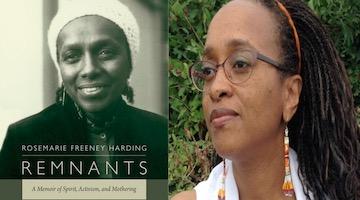 There is a need and desire among folks in activist communities for resources of ritual and spiritual grounding.
 Remains that were found to be those of a Black MOVE teen-ager who was killed by Philadelphia police in 1985 were treated as an anthropological specimen.
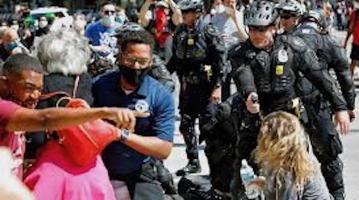 Do some, most or all US police departments have a pattern and practice of racial bias that makes them fundamentally unable to regulate themselves?
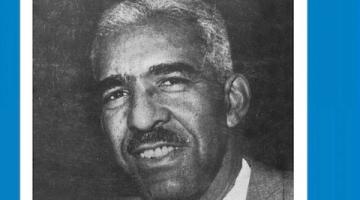 Hunton’s devotion to peace and “mutual cooperation” came out of his understanding that “war and militarism were endemic” to capitalism.


