by Mark P. Fancher
Elders and other influencers discouraged Black youth from becoming fodder for the Iraq war, but what of the looming U.S. imperial wars in Africa? The U.S. Africa Command propagates the lie that it only “advises” friendly forces on the continent, but “at the same time establishes bases in the Central African Republic and South Sudan” as part of a purported mission to hunt a guerilla force in the region. U.S. ground wars in Africa may be upon us before there is a chance “to throw up an anti-recruitment barrier around the community.” The education process must begin now, and become permanent.
Hell No, We Won’t Go To War Against Africa!
by Mark P. Fancher
“AFRICOM was integrally involved in the imperialist take-over of Libya, and now U.S. troops are trudging through Uganda.”
In 2005, U.S. Army brass panicked after reviewing the results of a specially commissioned study that showed a 41 percent drop in recruitment of people of African descent over a five year period. “It’s alarming,” said a general in charge of Army recruitment. He went on to attribute the de facto boycott to the war in Iraq and the views of teachers, preachers, coaches and other “influencers” in the black community who were urging young people not to sign on to what was ultimately acknowledged by many to be a pointless, senseless invasion and occupation of a sovereign country.
At the time, Harlem Congressman Charles Rangel was quoted as saying: “I have not found a black person in support of this war in my district.” Little wonder. Parents and grandparents still had painful memories of veterans of the U.S. debacle in Vietnam who returned broken physically, mentally and spiritually. The war-resisting spirit of these elders was revived by the then most recent imperialist escapade, and they made clear to their children and grandchildren that they had better “just say ‘no’” to military recruiters when they came calling.
It is precisely because of the now well-established willingness of Africans in America to draw the line against participation in imperialist wars of folly that the military has been acutely aware of the high risk of its attempts in recent years to establish a military presence in Africa. If young brothers and sisters refused to fight in Iraq, then any effort to persuade them to take up arms against Africa would present an extraordinary challenge that could fatally backfire if it were in any way mishandled.
“Even comforting smiles cannot hide the obvious fact that there have been U.S. boots on the ground in Africa.”
The military’s trepidation is evident from the fact that since its inception, U.S. Africa Command (AFRICOM) has devoted substantial time and resources to developing and publishing messages that assure and reassure the African World that, notwithstanding the undeniable fact that AFRICOM is a military entity, it is in Africa only to render humanitarian assistance, and to provide advice to Africa’s armies about how they – and not U.S. troops – might most effectively engage in combat. Unfortunately for the military’s public relations strategists, even comforting smiles cannot hide the obvious fact that there have been U.S. boots on the ground in Africa. AFRICOM was integrally involved in the imperialist take-over of Libya, and now U.S. troops are trudging through Uganda because President Obama took AFRICOM’s advice and sent them there purportedly to help in the hunt for the leadership of the Lord’s Resistance Army (LRA), a group accused of terrorism.
It has not escaped notice that this sudden U.S. interest in the LRA (which has been active for more than two decades) came on the heels of China’s negotiations with the Ugandan government for a major role in the development of an infrastructure to produce a vast amount of oil that was discovered in Uganda only a few years ago. Naturally there was immediate speculation that the supposed hunt for terrorists was actually a pretext for countering Chinese influence and securing access to a new oil supply. In response to skeptics’ questions about the true U.S. objectives in Uganda, Assistant Secretary of State Johnnie Carson dismissed all “conspiracy theories,” and insisted that the U.S. mission is: “focused on the LRA and the LRA only.” Apparently Carson expects us to simply take the word of an administration that on the one hand declares unequivocally on its AFRICOM website that it will not establish military bases in Africa, but at the same time establishes bases in the Central African Republic and South Sudan as part of the purported LRA mission.
“Young Africans in America are very much a part of the Pentagon’s recruitment calculations.”
While we might hope that our young men and women will once again readily see through the lies about Uganda in the same way that they saw the truth about Iraq, clarity on a mass level this time around is not assured. The wall-to-wall media coverage of “shock and awe” explosions that decimated Iraq made it easy for Africans in the U.S. to decide that they wanted no part of that war. However, the recent introduction of U.S. troops into Africa has been very quiet. The risk is that before there is widespread awareness of military involvement in the Ugandan region, the U.S. presence will have expanded to a point where recruitment efforts will intensify, and the black “influencers” who kept young people out of the Iraq war will not have had an opportunity to throw up an anti-recruitment barrier around the community before large numbers of young Africans are sweet-talked into enlisting.
As the U.S. Empire continues to crumble, we will see more desperate attempts to preserve its domination of the planet’s natural resources through the use of force, and we can be certain that young Africans in America are very much a part of the Pentagon’s recruitment calculations. While our activist impulses may scream for the immediate establishment of a “movement” to counter potential recruiting raids of our community, sober reflection might suggest instead that this is the time to move beyond an ad hoc approach. “Endless war” may mean that we must now institutionalize endless community education about the motives, objectives and methods of military programs that are in service to imperialism. We will know we have succeeded when, without prompting, every African youth will boldly declare: “Hell no, I won’t go.”
Mark P. Fancher is a lawyer and the author of the book, “I Ain’t Got Tired Yet.” He can be reached at mfancher@comcast.net.

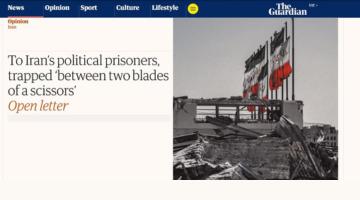 An Open Letter from the American "Left" allegedly on behalf of unnamed persons said to be Iranian political prisoners has provided cover for U.S. imperial aggression against Iran by refusing to…
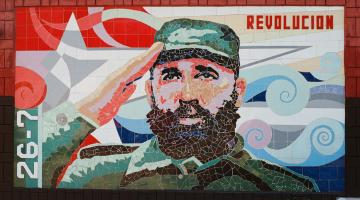 Empire taught us what to believe about the Global South. It also taught us how to move through it, and being colonized here does not exempt us from carrying those beliefs with us.
 The Bush administration had long planned a global war for U.S. hegemony, and the attacks of September 11 provided the perfect pretext to put those plans into motion.
 Oklahoma prison inmates were making political calls for a conservative Super PAC during the primary.
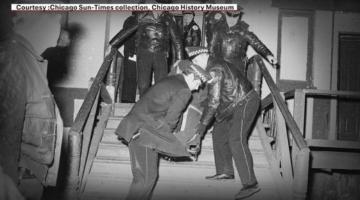 Longtime attorney Flint Taylor’s new book tells the story of the People’s Law Collective, which grew out of the radical movements of the late 1960s.


