
by C. Uzondu
The last thing Haiti needs is assistance from the likes of the Monsanto Corporation, purveyor of seeds that enslave the farmer. “Rather than facilitate the intensification of capitalist plunder of Haiti, tens of thousands of farmers chose to resist corporate power “– with fire.
Haiti:
The Gifts of Death Burned
by C. Uzondu
“Like all who peddle drugs, Monsanto wants their clients addicted.”
The
seeds of death were burned on June 4, 2010. Haitian farmers, many of
them members of Mouvement
National des Paysans de Congrès de Papaye (MPNKP) and Peasant Movement of Papay (MPP), do not view Monsanto’s “gift” with gratitude.
In the wake of the Haitian earthquake, Monsanto, the world’s largest seed company decided that it would donate “free” seeds to Haiti. According to Monsanto’s website, their “donation of hybrid seeds to Haiti is about farmers, people and food.”1 Much more quickly than many of the millions promised at the “donor” conference for Haiti, the seeds from Monsanto arrived.
A warm – well that is an understatement, a really hot – welcome awaited Monsanto’s “gift.” Haitian peasants protested the gift of death, the donation of seeds that the Haitian Ministry of Agriculture legitimized. The hybrid seeds were burned. To Monsanto and corporate controlled industrial agriculture, Haitians farmers said a fiery: “Hell no.”
Monsanto would have us believe that the best interest of Haitian farmers is their concern. However, many of the farmers seem to have a different perspective. If you were in the business of selling seeds would you want to increase your market share? If so, how would you do it? One way is to remove the competition: Mother Earth and farmers are competition; Mother Earth provides seeds freely and peasants save their own seeds. So Monsanto offers “free” hybrid seeds to Haitian farmers. Maybe Monsanto hopes that the farmers will accept industrial seeds and get hooked. For like all who peddle drugs, Monsanto wants their clients addicted. Industrial seeds, Monsanto hopes, will replace local Haitian seed varieties. So what if biodiversity is lost? What if the basis for Haitian food sovereignty is destroyed? Monsanto would have extended their market share by creating dependent farmers. Future profits would be basically guaranteed because Monsanto’s seeds would need Monsanto fertilizers and pesticides. Eventually, Monsanto’s gift of death would trap Haitian farmers, like we have seen in India, in the debt servitude that would increase Monsanto’s profits.
“Monsanto’s gift of death would trap Haitian farmers.”
Maybe Monsanto wants us to believe that the pursuit of profit is not its primary priority and that Monsanto is creating a win-win situation. After all, Haitian farmers will benefit also. Haitian farmers, says Monsanto, will be getting better seeds. “Haiti’s farmers need good quality seeds, because the better the seeds, the better the chances for more food from the same land.”2 Even if we accept this claim and there is no reason to do so, we can take issue with it on other grounds. Suppose better seeds are not the primary factor impeding Haitian peasant agriculture? Suppose the neoliberal policies imposed upon Haiti that destroyed local agriculture is the fundamental reason why Haiti is food dependent? But we need not suppose because the fact that “free” market fundamentalist policies opened the Haitian economy for freer exploitation
has
long been established.
Then there is the other problematic part of Monsanto’s claim: their seeds would help Haiti get more food from the same land. This is a technological fix that tries to sidestep a political problem. The political problem that must be confronted is the massive inequality in land ownership, the deliberate destruction of peasant agriculture, and the intensification of the industrial agriculture model. Even if Monsanto’s hybrid seeds are “better” (one must ask better for what? – monoculture agriculture?), these seeds do not provide Haitian peasant farmers with irrigation, with extension support, with no-interest or low interest credit, or with access to and control of better agricultural lands.
“Monsanto’s
gift of death would trap Haitian farmers.”
The farmers who gathered to burn Monsanto’s hybrid seeds recognize this. They also know that capitalist entities do not do “good” for its own sake. Profit maximization ultimately drives all acts. How else can one understand the attempt to own more and more of the world’s seeds – in other words, life itself – as intellectual property? As you read this be aware that attempts are being made to validate and promote the use of Monsanto’s “Terminator” technology. Terminator” technology refers to genetic-use restriction technologies (GURT). A good example of these is seeds that are genetically modified to NOT germinate. What nature gives for free, the seed corporations want to take away and own for their pursuit of profit. Isn’t there something fascist about this?
However, more debt and death is not appealing to Haitian farmers. This is why they incinerated Monsanto’s killer gift. In defense of life and livelihoods, the farmers vowed to save and share their own seeds. Rather than facilitate the intensification of capitalist plunder of Haiti, tens of thousands of farmers chose to resist corporate power.
The farmers who bonfired Monsanto’s gift of death recognize that Monsanto is a key agent in the extension of global fascism. There is a lesson in the burning of corporate seeds. Direct action by masses of people is essential if we are going to confront exploitation and domination. Direct action by masses of people is central to resisting fascism.
C.
Uzondu can be reached at c.a.uzondu@gmail.com.

 The debate over the EPA's new math misses the point. The agency hasn't changed its values, it has simply stopped pretending to account for communities it was never built to protect.
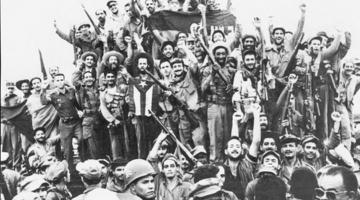 The survival of Cuba's socialist project remains one of the most critical holdouts against hemispheric domination, making its defense a global litmus test for sovereignty.
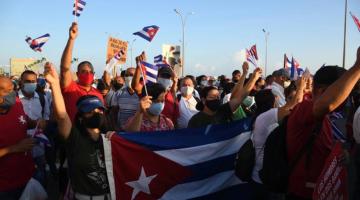 Branding Cuba an "extraordinary threat" on the anniversary of a regional peace declaration, the U.S. has escalated an assault designed to destroy hemispheric solidarity and justify hybrid war.
 After 41 years in French captivity, revolutionary militant Georges Ibrahim Abdallah speaks, offering an analysis of October 7th, global fascism, and the Palestinian resistance.
 Reuters sells custodial plunder as a pricing issue, turning blockade into “market caution.” We restore the missing record: seizures, supervision, and the re-routing of Venezuelan oil revenue through…


