Reparations and Globalization: At the Heart of the Debate, is Justice
by Courtenay Francis Raymond Barnett
“Why not hope that reparations will assist the necessary global healing process?”
The bicentennial of the abolition of the slave trade affords opportunity for reflections on both the slaving colonial past and the globalized present.
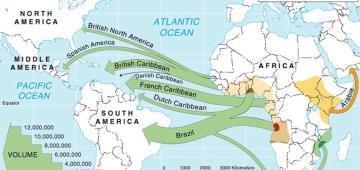
1492 was a commencement point for genocide of indigenous peoples, conquest of lands, the expansive Atlantic African Slave Trade and the establishment of plantation societies when European colonialist globalization implanted itself along with slavery and unfair trade practices with metropolitan masters. The question of the status of the African is interwoven with the on-going contemporary processes of globalization related to the terms of trade, the transfer of technology, inward investments in countries and communities (or lack thereof), availability of adequate education facilities and other facilitative mechanisms that advance peoples and improve their general welfare.
Ireland, once a backwater European country with a history of serfdom, poor education and inadequate levels of investment and technology, has emerged – assisted by decisive EU support and massive investments in education affording equitable treatment – to become an advanced country. The will to uplift Ireland by deliberate provision of substantial and suitable structural support mechanisms accompanied by concentration on education for the population, is instructive. An apology by Prime Minister Tony Blair for Britain’s policies that contributed to the deaths of about one million people in the Irish famine ought not, in this context, to be forgotten.
“Europe uplifted Ireland by deliberate provision of substantial and suitable structural support mechanisms accompanied by concentration on education for the population.”
It is an economic fact that Africa and Africans contributed to global development with materials such as palm oil, copper, chromium, platinum, gold, oil, uranium and more with its historical “gift” of millions of slaves for centuries of free labor to underpin Europe’s development. Famine, weak government, corruption, disease, fragility of family life in post-European colonial times do not alone explain the paucity distributed throughout Africa and among African descendants in the Caribbean, South and North America and Europe. That Idi Amin was brought to power with covert British action; Nigerian generals were installed to support Western ( primarily British) oil interests; diamond wars are funded and supplied with illicit arms from Europe; arms from Europe and America are delivered to rebel factions across Africa to control resource rich territories, are all facts, albeit often hidden, of African and global existence. From the early exploitative periods to the accumulative periods of the African Atlantic Slave Trade through to our post-colonial times the pull from Africa pushed European societies economically forward while leaving the Africans behind – or indeed, as Walter Rodney has demonstrated, Europe actively underdeveloped Africa.
As Malachy Postlethwayt, a political economist, frankly and honestly wrote in 1745: “British trade is a magnificent superstructure of American commerce and naval power on an African foundation.”
Simply stated, Africa is a resource rich continent requiring mechanisms for its resources to be applied for enrichment of its peoples. The global superstructure’s rules and operation which Postletwayt observed in the eighteenth century will have to be challenged and changed in the twenty-first, if certain groups and countries are to advance as has Ireland. This imperative implies changes in the mechanisms of global aid, trade, monetary exchanges, levels of education and training with an abandonment of the African kleptomaniacs and their kleptocracies.
Haitian slaves freed themselves by revolution. This earned Haiti the reward of a European blockade and the French demand for reparations to compensate owners for loss of their property, inclusive of the “chattels”/slaves. In 1914 America bought the debt from France and the Haitians continued to pay that debt until the 1950s. President Aristide demanded reparations payments from France, and raised his demand to an international level. America then assisted a coup to remove him. That those in Africa and of African descent across the globe should now join hearts and minds to demand African reparations does have good historical and more contemporary precedent.
“The real debate over reparations is an aspect of a broader global debate for justice.”
But, it is said, the Africans sold their own into slavery and are therefore undeserving of any reparations. Oppressed collaborating with oppressors is not an exclusive African phenomenon. One Hermann J. Abhs, a German Jew (Director of the Deutsche Bank Abhs) financed Auschwitz, the concentration camp in which thousands of Jews were slaughtered. As Director of the Deutsche Bank Abhs he definitely played a direct role in financially assisting the Nazi regime along with corporations that participated in war crimes. Indeed even while Jews resisted Nazi barbarism in struggles against their oppressors, some collaborated. Africans resisted European barbarism in struggles against their oppressors, yet some collaborated. But, Jewish restorative payments, we must assume, fall then in some special category. How many of the Jews killed in Auschwitz received reparations? Not one, for it was the descendants who were paid. But, Africans sold their own into slavery and so their descendants in the diaspora ought not to receive reparations, according to the opposition.
The real debate over reparations is an aspect of a broader global debate for justice. A retreat from the reparations debate is likewise an avoidance of urgent issues of global justice.
My 4th July, 2000 letter to Prime Minister Tony Blair raises at length the need for reparations. Graciously, we note, Mr. Blair’s half-hearted regrets (stopping short of a full apology) for Britain’s role in the Atlantic African Slave Trade upon which modern British advancement and global privilege is based. It is the same Prime Minister Blair who tendered his heartfelt apology to the Irish for the role of British policy in causing a million Irish deaths in the potato famine. John Burton, the then Irish Prime Minister had this to say in an appreciative response: “While the statement confronts the past honestly, it does so in a way that heals for the future.”
Legal precedents exist in abundance for reparations (in Australia, Canada, Germany, New Zealand, the Native Americans in America to mention some instances). Africa and its African descendants likewise must logically, legally and rightfully lay claim at the nation state level for reparations. In an era of Western led support for the global advancement of individual human rights, the concepts of “group rights” and “global justice” are logical extensions for the empowerment of individuals within historically disadvantaged groupings.
“The global cost of this peaceful restorative process for the twenty-first century will be substantially less than a year’s expenditure by America on its war in Iraq.”
My preferred formula for reparations is simple: A) An acceptable apology as acknowledgement for the crime against humanity; B) Debt cancellation; and C) A fifty year educational trust appropriately established and adequately funded and credibly managed to address the training, education and advancement of Africans on the continent and for those of African descent in the diaspora. It is assured that the global cost of this peaceful restorative process for the twenty-first century will be substantially less than a year’s expenditure by America on its war in Iraq at current costs. Reparations addressed in this way, “… does so in a way that heals for the future.”
The world does have choices to pursue restorative healing processes for the advancement and benefit of those living on the margins of the global village. The world also has choices to pursue illegal wars and other destructive processes such as deliberately provoking conflicts for resource domination. Reparations fall humanely and decisively in the former moral category. History indeed in one sense is past, yet in a contemporary sense we all live the histories that remain as conscious reality in every human being once we ask – why? The questions – why not justice? – why not equality? – why not fairness on a global scale? – why not hope that reparations will assist the necessary global healing process? Reparations, globalization as a moral and humane choice and not its alternative of a destructive amoral process, it seems, can couple hope with justice. Reparations must be addressed globally and resolved in a just manner as shall assist all humanity in our quest for improvement.
Courtenay Francis Raymond Barnett is a lawyer who has argued human rights and public interest cases. He lives and works in the Caribbean and can be reached via email at courtenaybarnett@yahoo.com or via his website at www.ar-africare.com.

 Leftist formation wins Colombian presidential election, the effort to end involuntary servitude in U.S. prisons, the impeachment of a Black legislator in Brazil, and the nature of fascism and need…
 Ajamu Baraka is National Organizer of the Black Alliance for Peace. He joins us to discuss the recent election results in Colombia where Gustavo Petro, became the new president, and Francia Marquez,…
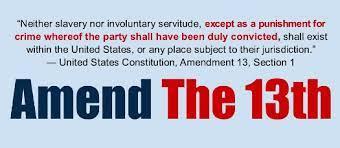 Savannah Eldrige is the founder of Coaliton to Abolish Slavery in Texas, an organization devoted to ending involuntary servitude in that state. She is also the founder of Be Frank 4 Justice which…
 Renato Freitas is a Black City Councillor in Curitiba, Brazil. He and others joined in national protests over the killing of Congolese immigrant Mugenyi Kabagambe, who was beaten to death after…
 In 2018 the late Glen Ford wrote about the election of Jair Bolsonaro to the Brazilian presidency, and the nature of fascism in Brazil, the U.S. and around the world. Margaret Kimberley reads…


