Question: What is the historical importance of black radio to African Americans?
Question: What is the historical importance of black radio to African Americans?
Glen Ford: My father was a big disc jockey so he coerced me into reading the news on the air during his radio shifts before my voice even changed. When I got out of the military in 1970, I actually had no experience in doing anything worthwhile or that could get one paid except jumping out of airplanes and talking on the radio. So that's when I entered radio in 1970. It was a wonderful period. The black radio format had exploded all across the country. By that time, there were now hundreds of black radio stations, but because we had just experienced the '60s and that wonderful period of people in motion, people demanded of those radio stations that they be accountable to that newly awakened community. So every radio station, virtually every black oriented radio station in the country was compelled to hire full-time at least one newscaster.
This was a whole new core of news people that didn't even exist five years before. All of the sudden there are hundreds of radio news people at stations that didn't even exist five years before who were trying to figure out how do we serve the community. What occurred was a beautiful synergy between a movement which still was vital and energetic and a bunch of young broadcasters whose self-assigned job was to report on the movement. In that process, new leadership, which comes up all the time in the community, found themselves with a voice on the air through a medium that was speaking directly to their people, not a general format medium that is speaking to everybody, but black radio that was speaking to your community. That became a megaphone for our black conversation that had never existed before. It unleashed, or empowered, a whole new layer generation of leadership to take on projects that they might have not taken on before without the presence of newscasters on the medium that their friends and family and neighbors were listening to, paying attention to them and treating them as black leaders.
Black radio then became an incubator for emerging black leadership. It was a wonderful and very vibrant time, but as radio consolidated, as things always do under capitalism, black radio also consolidated and began shedding its newsrooms. In 1973, in Washington D.C., three black oriented radio stations fielded 21 reporters. That's a black radio press core of its own in that city. Much the same was happening in big and small cities all across the country. In Washington D.C., today, there are six black oriented radio stations. Together they field only four reports. The black radio is no longer an incubator for black leadership and I believe that these decades of deterioration and now near extinction of black radio news has contributed to the leadership crisis that we have in black America.
Who is the leader? Who is choosing the leaders? You see what I am saying? The incubator is gone and now the discourse is entirely in the hands of a corporate media which is also white, even if it employs other black folks it's still a white corporate medium....
Read the rest at www.bigthink.com.

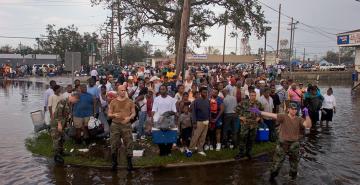 "Ethnic cleansing called Katrina" is the latest from BAR's Poet-in-Residence.
 Jaribu Hill, Executive Director of the Mississippi Workers’ Center for Human Rights, recounts the aftermath of Hurricane Katrina on the Gulf Coast and the efforts to organize on behalf of the people.
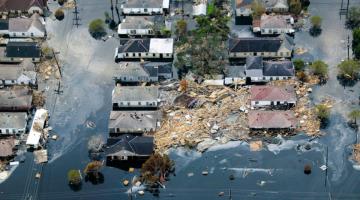 "Racism showed its ass in the days after August 29, 2005."
 The official response to Katrina was a catastrophic failure of the state. The real story of survival was written by a coalition of the discarded—ex-offenders and Black churches—who built their own…
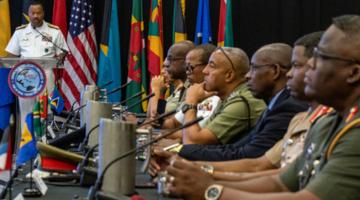 The U.S. is a purveyor of global violence, as illustrated by the intensifying militarism in the Caribbean and targeting of Venezuela. The struggle to establish a Zone of Peace directly challenges…


