by David Swanson
The only way to get something that remotely resembles single payer health care is to demand…single payer health care. Progressives that supported single payer now set their sites lower because President Obama isn’t going there. But “opening a political negotiation by asking for what the other side is offering is no negotiation at all.” Obama offers many explanations for backing away from the health care approach he once claimed to favor. But the real explanation “is the financial influence in Congress and the White House of the insurance industry.”
Give Everyone Healthcare By Shutting Down Insurance Companies
by David Swanson
”Medicare is much more efficient than insurance companies.”
Our nation has more money than any other, more weapons than all the others combined, and a majority of its citizens believing it is, in some undefined sense, superior. But the people who live in the United States trail many other nations in basic measures of health and well-being. Almost uniquely among wealthy nations, we leave tens of millions of our citizens without health coverage, and many times that number with insufficient -- albeit expensive -- health insurance. We pay more per capita than anybody else for healthcare, and we get dramatically less for it. What gives?
While there is great variation among the systems used in other wealthy nations, and while their citizens have complaints as well, there is a feature that everybody else has found effective that we uniquely lack, and nowhere is there a nation whose people would willingly part with that feature in exchange for a system like ours. That feature is called single-payer. In a single-payer system, such as Canada's, a nation can have private healthcare, private doctors, private hospitals, and greater choice for patients than what we have. In such a system, no insurance company can tell you which doctors to see, or tell doctors which patients to treat. Nor are there different prices and procedures depending on what class of patient you are, whether you have insurance through your job or privately, etc. In such a system, you can go to whatever doctors you want, bring no bill home, and spend zero minutes per year dealing with insurance companies. In such a system, health insurance companies, at least as we now know them, cease to exist.
“Few things are more despised than health insurance companies.”
But won't that cost more? And who will pay for it? Actually, it will mean tremendous savings, because all of the endless paperwork, bureaucracy, advertising, and pointless expenses of the insurance companies will be gone. Medicare is much more efficient than insurance companies, and what we are describing is essentially the expansion of Medicare to cover everyone and everything. This could be paid for, by the government (the single payer), with an employment tax that would cost most businesses significantly less than they now pay to health insurance companies. In fact, this shift would take an enormous burden off American businesses that businesses abroad do not carry. And, according to a study produced by the California Nurses Association, single-payer would provide a net gain of 2.6 million jobs. It would stimulate the economy significantly better than getting Wall Street banksters those second and third yachts. “Single-payer would provide a net gain of 2.6 million jobs.”
We are likely to see a dramatic change in healthcare policy this year, but probably at best it will include a limited expansion of Medicare or the creation of a limited public option alongside tweaks to the private, for-profit system still dominated by businesses that make money by avoiding providing healthcare. At worst, we'll see something called a "public option" that will actually amount to requiring people to purchase private health insurance, a solution already implemented with horrible results in Massachusetts. The White House recently even proposed privatizing health coverage for veterans, giving the insurance companies profits out of the Veterans' Administration at the expense of the provision of care. That proposal went over like a brick and was immediately withdrawn, but that is the force we are up against.
We do, however, have a tool with which to go up against it. A bill in the U.S. House of Representatives, HR 676, is sponsored by Congressman John Conyers and 75 other congress members. Last year it had 93 cosponsors, and I expect it will soon have more than that in this congress. The chances of passing the bill this year are slim, but its value in compelling a compromise that includes a partial solution is critical.
”The White House recently proposed privatizing health coverage for veterans.”
Your congress member may be like mine here in Virginia's Fifth Congressional District, Congressman Tom Perriello. He has not taken a position, and has frequently expressed his belief on this and other issues that the president will be the decider. Of course he's right that, to a great extent, we now have a monarchical rather than a legislative government. But we don't have to accept it. The people of this district, like yours, are not well represented by someone who informs us of what the president is doing. A journalist could do that. We are only truly represented if our congress member pushes for what we want, in hopes that the ultimate compromise will be moved somewhat in the direction of what we want. Opening a political negotiation by asking for what the other side is offering is no negotiation at all. And failing to support a necessary proven solution to our healthcare crisis that also creates 2.6 million jobs would be an outrage.
David Swanson is the author of the upcoming book "Daybreak: Undoing the Imperial Presidency and Forming a More Perfect Union" by Seven Stories Press. You can pre-order it for a discount price at http://tinyurl.com/daybreakbook

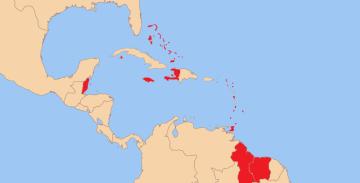 The author asks CARICOM member states to support the Haitian people in their struggle for sovereignty.
 Colombia's new president is popular with the people but beset by enemies. It is a common situation where the popular vote is not indicative of who really holds political power.
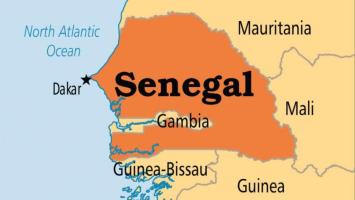 At least 16 people were killed after protests broke out in Senegal following the sentencing of leading opposition figure Ousmane Sonko to two years in prison. Mass public unrest has grown against…
 Uganda and Rwanda began their incursions into the Democratic Republic of Congo 23 years ago. Full reparations to victims have not been paid and the two invader countries still act with impunity.
 Tunde Osazua is Outreach Coordinator for Black Alliance for Peace and a civil society representative in the UN Permanent Forum on People of African D


