 by Howard Lisnoff
Forty years ago, government atrocities on two college campuses provoked hundreds of thousands to action in cities across the nation. Today, an even more lawless government terrorizes the world and robs its own citizens of rights that were once believed sacrosanct. “What is left of the peace movement is less than a toothless tiger.”
Four Dead in Ohio; Two in Mississippi
by Howard Lisnoff
“How many can recall the names of Phillip Gibbs and James Green who were killed at Jackson State College?“
I never knew Jeffrey Miller, but what happened in early May 1970 changed my life profoundly, while you became both victim and hero. The image of you fallen instantly became an icon of the antiwar movement and one of two or three images from the Vietnam era still etched into consciousness. The pain and grief of your family and those who loved you must live on in ways not easily imagined. You were one of four murdered on that infamous day in Kent, Ohio, along with nine injured, one of whom remains paralyzed today. Only ten days later, the same violence committed against antiwar demonstrators in Ohio was repeated in Mississippi, an event that seemed to slip away rapidly because of the institutionalized racism that is so much a part of the nation’s history. How many can recall the names of Phillip Gibbs and James Green who were killed at Jackson State College? You, along with hundreds of thousands of demonstrators, were protesting the Nixon administration's widening of the Vietnam War into Cambodia. Until then, the expansion of the war in Cambodia had been another dirty secret of the Nixon White House. With the help of Governor James Rhodes and the Ohio National Guard, May 4th would be written into history with the blood of antiwar patriots. Sixty-seven rounds of ammunition would kill and maim. At Jackson State College in Mississippi, besides killing Phillip and James, twelve more were wounded. During the following days, over one hundred high schools, colleges, and universities closed, while four million students went on strike.
Forty years is over half of most people’s lives, but how little have the actions of the nation and its people changed since then. As a generation we were represented by substantial numbers in the peace movement. We knew right from wrong in matters of war. The Geneva Conventions, the Nuremberg Principles, the Charter of the United Nations, and U.S. law prohibited the indiscriminate killing of civilians in battle and torture of prisoners of war. Those lessons had been learned, we erroneously thought, from the carnage of the battle against fascism during World War II. Vietnam represented the bald-faced aggression of a superior military and economic power against a puny force of nationalists seeking to reunite their artificially divided country. Napalm, free-fire zones, My Lai, strategic hamlets, and fragging all became common words in our vocabulary, so common as to almost deaden the horror of their reality. Another famous photo of children running down a road, burned, also etched itself indelibly in our minds. By the time Kent State and Jackson State College erupted, the horror of Vietnam was part of the national consciousness.
I had always hoped that the issue of war would have left lessons that the nation and its leaders could have benefited from, but that would not be the case. Wars, large and small, followed one another. Ronald Reagan turned the horror that was Vietnam into a cause célèbre by dubbing it a “noble cause.” That rhetoric opened the floodgates for low-intensity warfare in Central America during the 1980s and the support of the Taliban in Afghanistan during that same period. Granada and Panama would follow. The first Gulf War would attempt to make the world safe for this nation’s insatiable appetite for fossil fuel. We had helped create the monster Hussein by supporting him in his brutal war with Iran from 1980 through 1988. And when the blowback returned to haunt us in the first World Trade Center bombing in 1993 and the hideous carnage against civilians there on September 11, 2001, the nation was ill-prepared to utilize available intelligence information to prevent that grotesque loss of life.
“Vietnam represented the bald-faced aggression of a superior military and economic power against a puny force of nationalists seeking to reunite their artificially divided country.“
Outgrowths of the failure of U.S. foreign policy are the endless wars in both Afghanistan and Iraq. What is left of the peace movement is less than a toothless tiger. It has not drawn, in general, the support of a generation that grew up after Reagan and has been anesthetized by the pretty wares of incessant technological “advances.”
Eight months after the murders at Kent I decided to leave the Army Reserve unit to which I was attached. Ironically, I had joined the National Guard after graduating from college as a way to avoid the draft. Kent State precipitated my decision to leave the military. I would ultimately appeal an order to report for active duty based on my opposition to the war and complete unsuitability for military service. It would take the amnesty that Jimmy Carter declared to win any measure of justice from the government. Tens of thousands of resisters never received any justice, although resistance to the war outside of the military was far easier (in general) than resistance while in the military. Millions of lives would ultimately be lost in Southeast Asia along with over 58,000 U.S. soldiers. Many lives were ruined from the aftershocks of that war. It took three more years of war following the Kent State massacre for the U.S. to pull out of Vietnam and two additional years for that country to be reunified. There were no bloodbaths and all of Southeast Asia did not fall to Communism as had been predicted in the infamous domino theory used as an initial justification to launch that war. However, in part because of the destabilization of the secret war in Cambodia, a bloodbath did ensue there.
So in memory of Jeffrey Miller, Allison Krause, Sandra Scheuer, Bill Schroeder, Phillip Gibbs, James Green, and the brothers and sisters wounded at both Kent State and Jackson State, I’ll bring flowers to your grave on May 4th. I don’t think that the world is any saner than the day when you were killed. I would have liked us to have passed unknowingly on some street and for all the carnage never to have happened, but humanity is not at that point of development and it never may be, and my heart remains broken because of that.
Howard Lisnoff is a freelance writer. He can be reached at howielisnoff@yahoo.com.

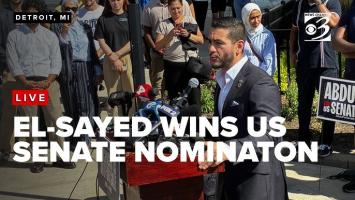 Abayomi Azikiwe is editor of the Pan-African Newswire and a Detroit resident and activist. Dr. Abdul El-Sayed won the Democratic Party primary for the senate in Michigan, defeating the establishment…
 Ajamu Baraka and Dimitri Lascaris join BettBeat media to interrogate the questions the anti-imperialists keep refusing to ask.
 The evisceration of the Voting Rights Act is of great concern to Black voters. But most of them are affiliated with the Democratic Party, whose leadership have no real interest in making it a…
 “I don't mean just in the struggles in these prisons. America is one whole concentration camp in and of itself.”
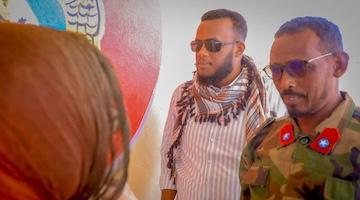 "During the last week of July, I traveled to the front lines of Somalia’s unresolved border conflict with Somaliland, the Somali secessionist state now recognized by Israel but not by


