FCC Commissioner to Public in Atlanta: Shut Up And Watch TV
by BAR Managing Editor Bruce Dixon
When the FCC, announced it would dispatch one or more of its five commissioners to an Atlanta “town hall” meeting on the digital TV transition, they knew they had a problem. The last thing they wanted was a public meeting, where actual inconvenient questions might be asked about their $80 billion dollar giveaway of more than 5000 new digital channels to commercial broadcasters.
Back in 2003 local activists had packed a hall full of angry people over the FCC media consolidation rules, and gotten around the mainstream media' embargo of the story by having the local Pacifica radio outlet cover the meeting live. In the following days the audio of that meeting was rebroadcast dozens of times over radio stations across the country, fueling nationwide public fury at the FCC's decision to allow almost unlimited concentration of media ownership.
But Atlanta's digital TV “town hall” wasn't organized by community activists, it was being put on by the FCC itself. First, although they identified the town in early August, they didn't reveal where the “hall” was till the Thursday before their Monday meeting. According to staff at Georgia Public Broadcasting, where the meeting was held, they withdrew a request for the building's auditorium, which seated hundreds, opting instead for conference room where fifty would have been a crowd, and padded the attendees there with low-level staff members from commercial broadcasters and cable TV. Aside from a notice on the web, there was no outreach at all.
“They didn't want the public there.” said a rep from the only community based organization to come without an invitation. The invited “community partners” were the same ones the FCC and its ethically challenged PR firm, Ketchum Communications has been meeting with since May, and some of whom are dependent on grants from the FCC, its contractors or broadcasters to support their digital TV "outreach" work. And of course the players were in the room, eight or nine broadcast TV execs including Jerry Pique of the Georgia Association of Broadcasters, the FCC's only real constituency.
To hear the standard line from the FCC's real constituency, and only real beneficiaries of the privatization of the digital airwaves we asked Jerry Pique of the Georgia Association of Broadcasters just why no new players, no minorities, women or new broadcast entrepreneurs were offered a chance at any of the new digital channels on the same terms as the existing broadcasters. He told us he “wasn't sure that was true.” But it was, and he well knew it. In the next breath Pique explained that there were not really any “new” channels at all, that digital technology simply enabled broadcasters to use “their” spectrum more efficiently in multiple channels, and after all, the broadcasters had invested big money and therefore deserved to get in line ahead of anybody else the FCC might want to give some access to.
When asked whether broadcasters deserved to get free spectrum, he contended that broadcasters “gave back” tens or hundreds of millions in dollars worth of free air time for community service, and that this more than fulfilled any public service obligation on their part.
The “town hall” in a conference room began ten minutes late with a broadcast exec reading FCC Commissioner Deborah Taylor Tate's bio from her web page by way of introduction, and the commissioner droning on for ten minutes on the wonderfulness of what she called “the revolution” in digital and high definition TV, and the tireless efforts of broadcaster and community forces in making sure senior citizens, the deaf and hearing impaired and foreign language speakers all got coverter boxes so they could keep watching TV.
Jerry Pique, the suit from the Georgia Association of Broadcasters spoke for five minutes, and with fewer than fifty people in the room, nearly all broadcasters, FCC and staff, she felt safe enough to allow everyone to introduce themselves.
This reporter took the opportunity to do what one is supposed to do in a “town hall” meeting, even though this was no such thing. I asked a question.
“Back in 1996 when this deal was cut (to give broadcasters exclusive access to the new stations that digital TV made possible) Senators Bob Dole and John McCain called it a $60 billion dollar giveaway to the existing broadcast licensees. We'd like to know... the spectrum is supposed to be the public's, so why didn't the public have any chance to get any new licenses... why did the FCC leave the one-license, one channel paradigm behind, why did all this happen without any public knowledge or input...When I asked (FCC) Chairman Martin some of these questions in Wilmington a couple weeks ago, he said minorities and women really ought to have more access, but I now know he meant leasing spectrum from broadcasters who got it themselves free from the FCC. We think that the FCC as guardian of the public interest should have thrown this process open to more players. We'd like to know how this happened and why.”
“Like a lot of you all, I wasn't at the FCC in 1996,” replied the commissioner. “I was having babies, so I wasn't there when these decisions were made. I'm just now trying to do my job the best I can to try to help people through this transition, and I think that that's what we've got to stay focused on, with 141 days to go before the biggest revolution that we have had... we're very much concerned about continuing on a path of efficient use of the spectrum and that's why we're concerned with getting innovative new devices and our public safety broadband network”
“Not to be impolite commissioner, but that's like saying 'shut up and watch TV', and let us bother with who gets the frequencies, let us bother with the governance... shut up and watch, get you a converter box.”
At this point the commissioner declared that the meeting would end a half hour earlier than scheduled, in six minutes, and that it was time to move on.
As the room was emptying out, we asked the commissioner whether she thought commercial broadcasters would put anything compelling on the new channels, whether they didn't have a positive disincentive to do so, for fear that they would draw audiences or advertisers from their other on-air offerings.
She answered that broadcasters were indeed putting the extra channels to good use. In several cities she had visited, they were airing high school football games and college theater. Actually this sort of proves the point, in that these are exactly the kind of broadcasts which don't compete with existing broadcast fare, and have very small audiences anyway. It's a long way from the world of richness and diversity of news and local programming that broadcast execs promised us twelve years ago in order to get exclusive access to the new digital broadcast real estate, much the same promises the cable TV industry made a generation ago. Now there are 500 cable channels, if you can pay for that many, not much to watch, and no localism, no public service. Will broadcast digital be any different?
The FCC will bring its Digital TV “Consumer Education” road show and “town hall meeting” to dozens of other cities between now and February 17, 2009. Consult their schedule to see when. Show up. Ask a question or two.
Bruce Dixon is based in Atlanta GA and can be reached at bruce.dixon(at)blackagendareport.com

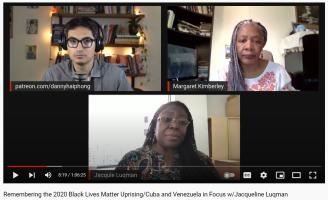 Journalist and activist Jacqueline Luqman joins the Left Lens to discuss the two year anniversary of the BLM uprisings and her recent trips to Cuba and Venezuela.
 The UK sends asylum seekers to Rwanda, the number of police killings in the U.S. continue unabated, and the Democratic Republic of Congo is threatened by U.S. client states and comprador, neo-…
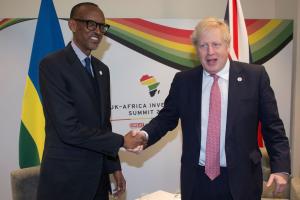 The United Kingdom is paying the Rwandan government $150 million to accept asylum seekers. The UK is accelerating deportations and denial of legal rights to Global South immigrants. Fiona of the…
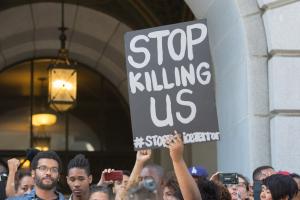 Police killings continue at a rate of more than 1,000 per year in the U.S., with 2022 numbers outpacing those of 2021. Sam Simyangwe of Mapping Police Violence provides analysis of the death toll and…
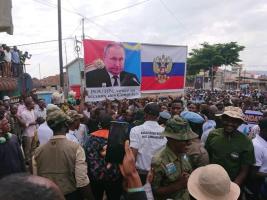 The Democratic Republic of Congo lives under threat of attack from neighboring U.S. client states Rwanda and Uganda. Its neo-colonial leadership acts on the direction of Washington and Europe.…


