A Black Agenda Radio commentary by BAR executive editor Glen Ford
The African Union is moving towards a break with the International Criminal Court, a tribunal that only indicts Africans who get on the wrong side of the United States. Desmond Tutu and others claim the ICC needs to be there, to defend “the victims.” But its brand of justice is highly selective. “The ICC is a tool of U.S. foreign policy, an instrument of neocolonialism.”
Desmond Tutu is Wrong: The AU Should Quit the International Criminal Court
A Black Agenda Radio commentary by BAR executive editor Glen Ford
“He might just as well argue for the return of colonial rule, which established its own kind of law and order in Africa.”
The African Union is on a collision course
And that is the heart of the matter. It is a travesty of justice that the ICC only indicts Africans, but even more importantly, the International Criminal Court also only indicts those politicians that get on the wrong side of the United States and the former colonial powers in Africa. The ICC is a tool of U.S. foreign policy, an instrument of neocolonialism.
Among the apologists for the ICC is South African former archbishop Desmond Tutu, who says
“The ICC is a cog in the imperial machinery.”
Tutu maintains that, without the deterrence of the ICC, African “countries could and would attack their neighbors, or minorities in their own countries, with impunity.” Well, that is, in fact, the case right now in Africa, and it has occurred with the complicity of the ICC, which has sanctioned and morally assisted mass murder and outright genocide by American allies on the continent.
And here lies the great irony. The very nations that most strongly oppose the ICC – Rwanda, Uganda and Ethiopia – have the blood of millions on their hands. Rwanda and Uganda are principally responsible for the death of six million Congolese over the past 17 years, an ongoing genocide armed and financed by the United States and Britain. The Ethiopian regime’s brutality toward its Somali and Omoro ethnic groups has also been described as genocidal. But, because the United States is also deeply complicit in these crimes, there is no threat of prosecution by the International Criminal Court. The court is only deployed against those countries and leaders targeted by the United States.
So, why are Ethiopia, Rwanda and Uganda worried? Clearly, they understand that, if the United States can give impunity, it can also take it away. They remember that Iraq’s Saddam Hussein used to be a U.S. ally, and that Libya’s Muammar Gadaffi and Syria’s Bashar al-Assad cooperated with the U.S. war on terror – until the U.S. turned against them. The worst purveyor of crimes against humanity in Africa and the world is U.S. imperialism. The ICC is a cog in the imperial machinery, which recognizes no law, but only its own interests. You can’t fight U.S. Empire and its crimes and, at the same time, defend the International Criminal Court. They are one and the same.
For Black Agenda Radio, I’m Glen Ford. On the web, go to BlackAgendaReport.com.
BAR executive editor Glen Ford can be contacted at Glen.Ford@BlackAgendaReport.com .

 The police as they exist today need to be abolished, there’s no question. “Diversity doesn’t change the fundamental dynamics of policing.”
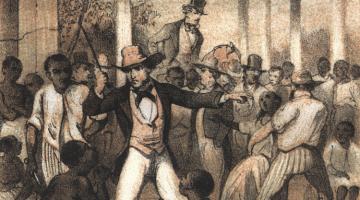 Much of what is called the “left” still insists that the American “revolution” of 1776 is “unfinished,” when history shows that white supremacy was the intended result.
 Most people contribute to injustice not as direct perpetrators but as indirect participants who enable, perpetuate, benefit from, and inherit histories of violence and contemporary systems of explo
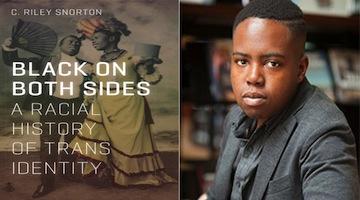 The inhabitation of the un-gender-specific and “fungible” also mapped the affective grounds for imagining other qualities of life and being for those marked by and for captivity.
 The surge of attention to the Israeli occupation is unimaginable without last year’s “George Floyd” protests.


