by Mark P. Fancher
The CIA’s activities in Africa go and in hand with the huge U.S. military offensive on the continent. The agency “has maintained a continuing presence on the African continent into the 21st Century, engaging in various nefarious activities, including supporting foes of the Gadhafi government in Libya.”
The CIA is No Stranger to Africa – But We Wish It Was
by Mark P. Fancher
“The impact of the agency’s activities on the African continent must not escape notice.”
Revelations contained in an unreleased nearly 7,000 page Senate Intelligence Committee report about CIA torture of purported terrorism suspects should come as no surprise to those with even a passing acquaintance with the agency’s long history of international crimes. Among other things, the study reportedly details the CIA’s systematic use of slapping, humiliation, sleep-deprivation, freezing and waterboarding. While this may not be news to informed observers, some might be a bit shocked by the candid reactions to the report by the Obama administration. A leaked White House document says of the report: “This report tells a story of which no American is proud.” President Obama himself said: “…we tortured some folks. We did things that were contrary to our values.”
Everything connected with the torture program is unseemly and unconscionable, and is intolerable everywhere. Africa in particular, with all of its many challenges has no need for any part of it. But as the CIA comes under renewed scrutiny, the impact of the agency’s activities on the African continent must not escape notice. Last year Crofton Black, an investigator for Reprieve, a London-based human rights organization, produced a collection of documents that he claims demonstrates that Africa has been used by the CIA as part of its extraordinary rendition program – the forced transportation of terror suspects to countries where the use of torture is tolerated. In a sworn statement he alleges that a group of private companies acting in concert on behalf of the U.S. government organized five rendition trips between Djibouti and Kabul, Afghanistan.
Black said: “The U.S. CIA rendition program operated by chartering aircraft from private companies to move detainees, in part in order to avoid the notification and authorization requirements of the Convention on International Civil Aviation.” He also said: “…this group of contracts [involving the companies in question] was set up and authorized to carry out missions for the U.S. government. This group of contracts and associated trips have been demonstrably linked to the U.S. rendition program via investigations and evidence filed in litigation in the U.S. and the European Court of Human Rights.” Black’s statement was offered in support of a complaint filed by Mohammed al-Assad, a Yemeni national who alleges he was abducted in Tanzania and held by the CIA in Djibouti and Afghanistan.
“Patrice Lumumba, the assassinated Prime Minister of Congo, found his way into the agency’s cross-hairs in 1961.”
U.S. intelligence operations in Africa are apparently broader than a few discrete CIA extraordinary rendition missions. A couple of years ago, the Washington Post reported: “The CIA has expanded its counterterrorism and intelligence-gathering operations in Africa, but its manpower and resources pale in comparison with those of the military.” The Post further explained:
“Under a classified surveillance program code-named Creek Sand, dozens of U.S. personnel and contractors have come to Ouagadougou [in Burkina Faso] in recent months to establish a small air base on the military side of the international airport. The unarmed U.S. spy planes fly hundreds of miles north to Mali, Mauritania and the Sahara, where they search for fighters from al-Qaeda in the Islamic Maghreb, a regional network that kidnaps Westerners for ransom.” The Post further reported that drones are used by intelligence personnel in Africa, and they are: “…Predator and Reaper drones, the original and upgraded models, respectively, of the remotely piloted aircraft that the Obama administration has used to kill al-Qaeda leaders in Pakistan and Yemen.”
The CIA is no stranger to Africa. Patrice Lumumba, the assassinated Prime Minister of Congo, found his way into the agency’s cross-hairs in 1961. In his book about the assassination, author Ludo De Witte said: “…[T]he CIA scientist [Sidney] Gottlieb said he had been sent to the Congo with a box of poison to ‘mount an operation…to either seriously incapacitate or eliminate Lumumba’…” Although Larry Devlin, the CIA’s station chief in Congo, has insisted the CIA did not kill Lumumba, in his own book he admitted: “CIA covert political action and military operations did, however, contribute to the removal of Lumumba from power…” CIA meddling in Africa continued into the 1970s. In his book In Search of Enemies, former CIA agent John Stockwell detailed the agency’s involvement in Angola’s war for liberation. The agency has maintained a continuing presence on the African continent into the 21st Century, engaging in various nefarious activities, including supporting foes of the Gadhafi government in Libya.
As the release of the Senate torture report became an imminent reality, the CIA apparently could not restrain its criminal impulses and allegedly broke into Senate Intelligence Committee computers. They also allegedly attempted to have the committee’s staff members prosecuted on the basis of false information. Senator Dianne Feinstein then announced that the report cannot yet be released because of the CIA’s efforts to redact portions of the document and “eliminate or obscure key facts that support the report’s findings and conclusions.”
With these and other actions, the CIA may have gone a bit too far, because some in both government and the mainstream media have begun to attack the agency with a vengeance for its recent conduct. The gathering storm of anger may ultimately prove the late Kwame Ture to have been prophetic. He said that even though his organization, the All-African People’s Revolutionary Party was working to “smash” the CIA, it will ultimately be mainstream “democratic forces” that will one day join the campaign against the agency and deliver the knockout punch.
Mark P. Fancher is an attorney who writes frequently about the U.S. military presence in Africa. He can be contacted at mfancher@comcast.net.

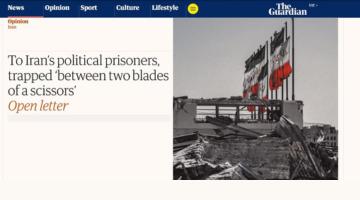 An Open Letter from the American "Left" allegedly on behalf of unnamed persons said to be Iranian political prisoners has provided cover for U.S. imperial aggression against Iran by refusing to…
 Empire taught us what to believe about the Global South. It also taught us how to move through it, and being colonized here does not exempt us from carrying those beliefs with us.
 The Bush administration had long planned a global war for U.S. hegemony, and the attacks of September 11 provided the perfect pretext to put those plans into motion.
 Oklahoma prison inmates were making political calls for a conservative Super PAC during the primary.
 Longtime attorney Flint Taylor’s new book tells the story of the People’s Law Collective, which grew out of the radical movements of the late 1960s.


