by Sikivu Hutchinson
The days of “Say it loud, I’m Black and I’m proud” are no more. Young African Americans in search of work find their heritage a hopeless drag on upward mobility. “Obama’s Talented Tenth magic,” it appears, does not rub off. “In some instances, graduates of historically black colleges and universities have deleted all reference to their tenure and omitted mentions of involvement in ethnically suspect groups” – especially their own.
Call Me Barry: Obama’s Tough Love
by Sikivu Hutchinson
“Some black college grads are changing their names from Rashida to Heidi, Omari to Chip (or Barack to Barry).”
In the dark of any given movie theatre, from Main Street USA to MLK Boulevard, they surround us: white America’s Hollywood objects of desire, playing romance and adventure in full amnesiac bloom. They taunt and entice, radiating spunk and derring-do in the face of strenuous man-hunting, universe-saving, dragon slaying and average hardworking Americana family-hood. Missing from the studio green light rosters are the tales of the ambitious, play by the rules black girls and boys newly-minted in the job market and beat down by underemployment. The ones who are initiated into adulthood on reverse discrimination screeds heralding the white working class as the last acceptably dumped on “minority.” The ones who are promised that the legions of Talented Tenth blacks armed with college degrees will level institutional racism. The ones who must quietly “absent” themselves from their resumes as white convicted felons, cashing in on their birthright, waltz through corporate doors.
A recent New York Times article on black college grads’ struggle to find jobs should be sobering for anyone with the deluded belief that Obama’s Talented Tenth magic will rub off on them. According to the Times, some black college grads, fearing that they will forever be consigned to fast food fryers or professional irrelevance, are changing their names from Rashida to Heidi, Omari to Chip (or Barack to Barry). Staggering black unemployment rates five percent above the national average have made black job applicants desperate to preempt racist discrimination by potential employers. In some instances, graduates of historically black colleges and universities have deleted all reference to their tenure and omitted mentions of involvement in ethnically suspect groups.
“Jockeying for a palatable white norm, blacks must effectively water themselves down.”
These trends point to the larger paradox of black invisibility. The Congressional Black Caucuses’ (CBC) futile White House lobby for targeted initiatives to address black unemployment underscores the divide between the image of black assimilation suggested by the hyper-telegenic Obama family and the reality of post-Jim Crow segregation. Jockeying for a palatable white norm, blacks must effectively water themselves down, evacuate their social histories and memorialized sense of self and accomplishment. Racist death threats against Obama, coon/welfare mother cheat references on AOL news posts and Fox News-fueled tea party insurgencies offer a steady avalanche of evidence that representations of blackness remain fixed in the white mainstream mind.
Indeed, the current crop of mainstream film narratives about blackness, from the blockbuster white woman’s burden romp The Blind Side to the lurid ghetto pathology of Precious—offer powerful affirmation of the seductive lure and redemptive powers of whiteness. Released in an era where the rhetoric of post-racialism has reached surreal fever pitch, both films are essentially bookended portraits of the perils of being an orphaned black child in a dysfunctional racial “subculture.” The character Preciousinitially achieves agency by fantasizing herself thin, “pretty” and white, while Blind Side protagonist Michael Oher escapes the “Moynihanian” churn of black poverty into the healing arms and tough love of a benevolent white mistress, or, rather, adoptive mama. While Precious gets props for spotlighting the subjectivity of a non-traditional black female protagonist, it does nothing to disrupt patriarchal assumptions about black femininity or challenge the masculinist culture of violence that underlies Precious’ sexual abuse by her father. The unrelenting bleakness and solipsistic vacuum of Precious’ swaggering welfare mother’s den in the projects effectively lets the dominant culture off the hook. Lacking historical context or socioeconomic critique of the complicity of racist sexist social institutions, these films offer comforting retrograde portrayals of good and evil, where transformation of  individual circumstance is the bellwether for social change.
“Graduates of historically black colleges and universities have deleted all reference to their tenure and omitted mentions of involvement in ethnically suspect groups.”
Ultimately, these triumphal human spirit over adversity morality plays go down well with prevailing conservative bromides of bootstraps enterprise and white (or, in the case of Precious, light-skinned black) patronage. Popular culture messages such as these also bolster Obama’s trickle down doctrine of “benign” ghetto neglect. Bailing Wall Street and his corporate cronies out to mega-billions while kicking the CBC to the curb, Obama has symbolically wagged his finger and reminded us hardheaded Negroes once again that he never promised black America any kind of Rose Garden.
Sikivu Hutchinson is the editor of blackfemlens.org and a commentator for KPFK 90.7FM.

 Previously suppressed evidence shows that dictator Paul Kagame’s forces slaughtered hundreds of thousands of Hutus – the other side of the Rwandan genocide.
 Racist Imperialism Killed Millions in Congo
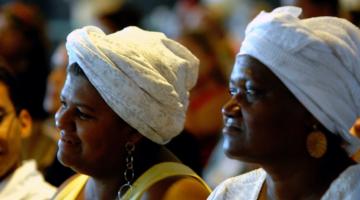 The autonomous settlements established by Black and indigenous Brazilians to escape slavery and ongoing oppression number between 3,000 and 5,000, “but the Brazilian government only recognizes abou
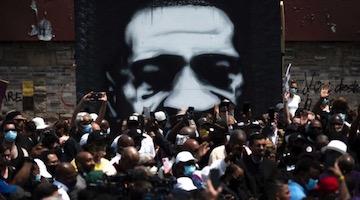 Critical Race Theory holds that racism is endemic to US society, while Afropessimism and Social Death “suggests that, regardless of what Black bodies do, [they] will experience gratuitous violence,
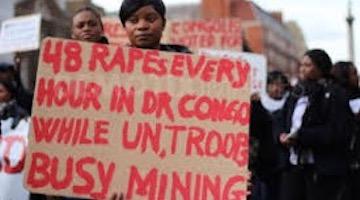 “More than 5.4 million died in the DRC as a direct or indirect consequence of the ongoing racist, neocolonial policy imposed on the Congolese population in an attempt to dismantle the Congo,” said


