by Bill Quigley
The United States is the world leader in both mass incarceration and the systematic isolation of prisoners. President Obama has earned his own grotesque superlative, having “prosecuted more whistleblowers for espionage than all other presidents combined.” In the case of Bradley Manning, “much of what was published by Wikileaks was either not actually secret or should not have been secret.”
Bradley Manning, Solitary Confinement and Occupy 4 Prisoners
by Bill Quigley
“Experts estimate a minimum of 20,000 people are held in solitary in supermax prisons alone, not counting thousands of others in state and local prisons who are also held in solitary confinement.”
US Army Private Bradley Manning has been formally charged with numerous crimes at Fort Meade, Maryland. Manning, who was nominated for the Nobel Peace Prize by members of the Icelandic Parliament, is charged with releasing hundreds of thousands of documents exposing secrets of the US government to the whistleblower website Wikileaks. These documents exposed lies, corruption and crimes by the US and other countries. The Bradley Manning defense team points out accurately that much of what was published by Wikileaks was either not actually secret or should not have been secret.
The Manning prosecution is a tragic miscarriage of justice. US officials are highly embarrassed by what Manning exposed and are shooting the messenger. As Glen Greenwald, the terrific Salon writer, has observed, President Obama has prosecuted more whistleblowers for espionage than all other presidents combined.
One of the most outrageous parts of the treatment of Bradley Manning is that the US kept him in illegal and torturous solitary confinement conditions for months at the Quantico Marine base in Virginia. Keeping Manning in solitary confinement sparked challenges from many groups including Amnesty International, Human Rights Watch, the Center for Constitutional Rights, the ACLU and the New York Times.
“After 60 days in solitary peoples’ mental state begins to break down.”
Human rights’ advocates rightly point out that solitary confinement is designed to break down people mentally. Because of that, prolonged solitary confinement is internationally recognized as a form of torture. The conditions and practices of isolation are in violation of the Universal Declaration of Human Rights, the UN Convention against Torture, and the UN Convention on the Elimination of all forms of Discrimination.
Medical experts say that after 60 days in solitary peoples’ mental state begins to break down. That means a person will start to experience panic, anxiety, confusion, headaches, heart palpitations, sleep problems, withdrawal, anger, depression, despair, and over-sensitivity. Over time this can lead to severe psychiatric trauma and harms like psychosis, distortion of reality, hallucinations, mass anxiety and acute confusion. Essentially, the mind disintegrates.
That is why the United Nations special rapporteur on torture sought to investigate Manning’s solitary confinement and reprimanded the US when the Army would not let him have an unmonitored visit.
History will likely judge Manning as heroic as it has Daniel Ellsberg, who leaked the Pentagon Papers.
It is important to realize that tens of thousands of other people besides Manning are held in solitary confinement in the US today and every day. Experts estimate a minimum of 20,000 people are held in solitary in supermax prisons alone, not counting thousands of others in state and local prisons who are also held in solitary confinement. And solitary confinement is often forced on Muslim prisoners, even pre-trial people who are assumed innocent, under federal Special Administrative Measures.
In 1995, the U.N. Human Rights Committee stated that isolation conditions in certain U.S. maximum security prisons were incompatible with international standards. In 1996, the U.N. special rapporteur on torture reported on cruel, inhuman, and degrading treatment in U.S. supermax prisons. In 2000, the U.N. Committee on Torture roundly condemned the United States for its treatment of prisoners, citing supermax prisons. In May 2006, the same committee concluded that the United States should "review the regimen imposed on detainees in supermax prisons, in particular, the practice of prolonged isolation."
“Solitary confinement is often forced on Muslim prisoners, even pre-trial people who are assumed innocent.”
John McCain said his two years in solitary confinement were torture. "It crushes your spirit and weakens your resistance effectively than any other form of mistreatment." The reaction of McCain and many other victims of isolation torture were described in an excellent 2009 New Yorker article on isolation by Atul Gawande. Gawande concluded that prolonged isolation is objectively horrifying, intrinsically cruel, and more widespread in the U.S. than any country in the world.
Last week hundreds of members of the Occupy movement merged forces with people advocating for human rights for prisoners in demonstrations in California, New York, Ohio, and Washington DC. They call themselves Occupy 4 Prisoners. Activists are working to create a social movement for serious and fundamental changes in the US criminal system.
One of the major complaints of prisoner human rights activists is the abuse of solitary confinement in prisons across the US. Prison activist Mumia Abu-Jamal said justice demands the end of solitary: “It means the abolition of solitary confinement, for it is no more than modern-day torture chambers for the poor.” Pelican Bay State Prison in California, the site of a hunger strike by hundreds of prisoners last year, holds over 1000 inmates in solitary confinement, some as long as 20 years.
“Prolonged isolation is objectively horrifying, intrinsically cruel, and more widespread in the U.S. than any country in the world.”
At the Occupy Prisoners rally outside San Quentin prison, the three American hikers who were held for a year in Iran told of the psychological impact of 14 months of solitary confinement. Sarah Shourd said the time without human contact drove her to beat the walls of her cell until her knuckles bled.
When Manning was held in solitary he was kept in his cell 23 hours a day for months at a time. The US government tortured him to send a message to others who might consider blowing the whistle on US secrets. At the same time, tens of thousands of others in the US are being held in their cells 23 hours a day for months, even years at a time. That torture is also sending a message.
Thousands stood up with Bradley Manning and got him released from solitary. People must likewise stand up with the thousands of others in solitary as well.
So, stand in solidarity with Bradley Manning and fight against his prosecution. And stand also against solitary confinement of the tens of thousands in US jails and prisons. Check out the Bradley Manning Support Network, Solitary Watch, and Occupy 4 Prisoners for ways to participate.
Bill Quigley teaches law at Loyola University New Orleans and works with the Center for Constitutional Rights. A version of this article with sources is available. You can reach Bill at quigley77@gmail.com.

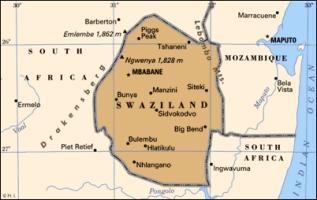 June 29 was observed as a day of commemoration in Swaziland to honor the dozens of people killed by the forces of King Mswati III during the unprecedented anti-monarchist uprising of 2021
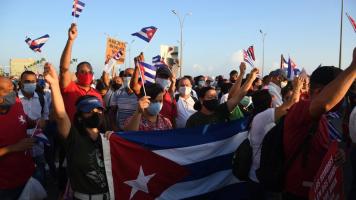 Black Alliance for Peace condemns U.S. sanctions on Cuba and supports self-determination and sovereignty for that nation.
 U.S. involvement in Cuban protests on July 11, 2021, Black community in Atlantic City, NJ fights for justice, and Democrats' political pressure and voter intimidation remove Green Party from North…
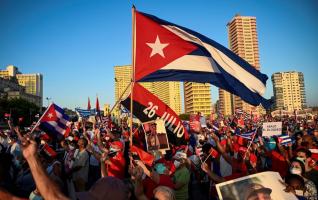 The U.S. played a role in orchestrating what were described as anti-government protests in Cuba on July 11, 2021. Isaac Saney is a history professor and Cuba specialist at Dalhousie University in…
 On July 4, 2020, seven Black men were arrested while protesting the police killing of George Floyd. But Atlantic City’s black community also suffers from ineffective political leadership, corporate…


