Black Joblessness: Never a Priority
A Black Agenda Radio commentary by Glen Ford
"The criteria for government intervention in the economy is color-coded."
President-elect Barack Obama says he'll put the interests of "Main Street" above those of Wall Street, in tackling the economic crisis. It is appropriate that we ask, Which Main Street is he talking about? It has been a very long time since the main streets of Black America were assigned any priority in terms of unemployment relief. Clearly, the criteria for government intervention in the economy is color-coded, rather than based on objective measurements of social and economic distress. On Black Main Streets, for at least two generations unemployment has consistently registered at least twice as high as on white Main Streets. The two-to-one racial ratio holds true in good times and in bad, as if it were a law of modern American economic life. Therefore, by any comparative analysis, African Americans are ALWAYS in a state of employment crisis.
Yet, Black unemployment levels are almost never considered to be intolerable - that is, a problem of such magnitude it demands fixing. The one exception - the period in which Black unemployment, especially Black youth unemployment, rated a national priority - was during the Sixties, when cities burned.
The unfolding economic collapse promises to disproportionately harm those who are already most damaged by racial employment structures in the United States. Officially, Black joblessness in October stood at 11.1 percent, compared to 5.9 percent for whites, 8.8 percent for Hispanics and less than four percent for Asians. But it has long been apparent that the federal government's methods for counting the unemployed vastly underestimate joblessness, especially in Black America. In 2003, during the last recession, a survey that measured the employment/population ratio showed that only slightly more than half of Black males between the ages of 16 and 65 in New York City, held jobs, although the official Black unemployment rate was just under 13 percent. The difference between 13 percent and 49 percent of Black males being outside the official labor force, is the difference between a community that is gravely challenged by joblessness, and one that has been crushed by it.
"Black youth wind up in the million-strong African American prison gulag - a cohort that is not counted among the officially unemployed."
Measuring the percentage of people who are inside, or outside, the official labor force provides a much better picture of that community's actual relationship to the larger economy and society. It shows us where the real, structural problems are, the places where extended unemployment benefits make only marginal differences because large proportions of people have not been working on the books for a very long time, or have never had an effective chance to enter the official work force. Economic downturns are especially damaging to the employment prospects of Black youth, who then wind up in the million-strong African American prison gulag - a cohort that is not counted among the officially unemployed. These young men, and increasing numbers of young women, join the ranks of the permanently marginalized, who literally do not count in public policy discussions outside the arena of criminal justice or other projects of repression or removal.
A public policy that systematically papers over the actual employment patterns of the inner city, cannot even begin to tackle unemployment on Black Main Street.
For Black Agenda Radio, I'm Glen Ford.
BAR executive editor Glen Ford can be contacted at Glen.Ford@BlackAgendaReport.com.

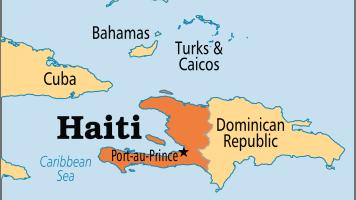 Dr. Jemima Pierre is a professor in the African American Studies and Anthropology Departments at UCLA.
 Johanna Miller is Director of Education Policy at the New York Civil Liberties Union.
 Quinn Cozzens is a staff attorney with Abolitionist Law Center who joins us to discuss the issue of sentencing for felony murder in Pennsylvania.
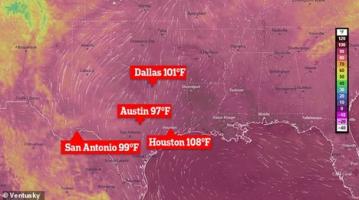 The earth recently experienced its hottest days on record. Here in the U.S. Black people face the worst consequences of the climate crisis.
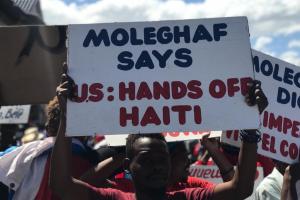 Black Agenda Report continues its commitment to reporting on events in Haiti.


