A Black Agenda Radio commentary by Glen Ford
The U.S. set the stage for the Afghan (and Pakistan) war eight years ago, when it handed out drug dealing franchises to warlords on Washington's payroll. Now the Americans, acting as Boss of All Bosses, have drawn up hit lists of rival, “Taliban” drug lords. “It is a gangster occupation, in which U.S.-allied drug dealers are put in charge of the police and border patrol.”
American Are Deeply Involved In Afghan Drug Trade
A Black Agenda Radio commentary by Glen Ford
“U.S.-allied drug dealers are put in charge of the police and border patrol, while their rivals are placed on American hit lists.”
If you’re looking for the chief kingpin in the Afghanistan heroin trade, it’s the United States. The American mission has devolved to a Mafiosi-style arrangement that poisons every military and political alliance entered into by the U.S. and its puppet government in Kabul. It is a gangster occupation, in which U.S.-allied drug dealers are put in charge of the police and border patrol, while their rivals are placed on American hit lists , marked for death or capture. As a result, Afghanistan has been transformed into an opium plantation that supplies 90 percent of the world’s heroin. An article in the current issue of Harper’s magazine explores the inner workings of the drug-infested U.S. occupation, it’s near-total dependence on alliances forged with players in the heroin trade. The story centers on the town of Spin Boldak, on the southeastern border with Pakistan, gateway to the opium fields of Kandahar and Helmand provinces. The chief Afghan drug lord is also the head of the border patrol and the local militia. The author is an undercover U.S.-based journalist who was befriended by the drug lord’s top operatives and met with the U.S. and Canadian officers that collaborate with the drug dealer on a daily basis. The alliance was forged by American forces during the U.S. invasion of Afghanistan in 2001, and has endured and grown ever since. The drug lord, and others like him throughout the country, is not only immune to serious American interference, he has been empowered through U.S. money and arms to consolidate his drug business at the expense of drug-dealing rivals in other tribes, forcing some of them into alliance with the Taliban. On the ground in Pashtun-speaking Afghanistan, the war is largely between armies run by heroin merchants, some aligned with the Americans, others with the Taliban. The Taliban appear to be gaining the upper hand in this Mafiosa gang war, the origins of which are directly rooted in U.S. policy.
“It is a war whose order of battle is largely defined by the drug trade.”
Is it any wonder, then, that the United States so often launches air strikes against civilian wedding parties, wiping out the greater part of bride and groom's extended families? America’s drug-dealing allies have been dropping dimes on rival clans and tribes, using the Americans as high-tech muscle in their deadly feuds. Now the Americans and their European occupation partners have institutionalized the rules of gangster warfare with official hit lists of drug dealers to be killed or captured on sight – lists drawn up by other drug lords affiliated with the occupation forces.
This is the “war of necessity” that President Barack Obama has embraced as his own. It is a war whose order of battle is largely defined by the drug trade. Obama's generals call for tens of thousands of new U.S. troops in hopes of lessening their dependency on the militias and police forces currently controlled by American-allied drug dealers. But of course, that will only push America's Afghan partners in the drug trade into the arms of the Taliban, who will cut a better deal. Then the generals were argue that they need even more U.S. troops.
The Americans created this drug-saturated hell, and their occupation is now doomed by it. Unfortunately, they have also doomed millions of Afghans in the process.
BAR executive editor Glen Ford can be contacted at Glen.Ford@BlackAgendaReport.com .

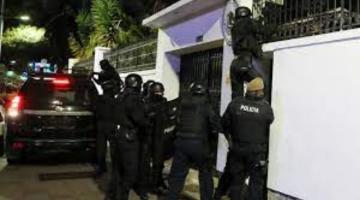 Camila Escalante joins to discuss Ecuador’s intrusion into Mexico’s embassy in Quito and the arrest of Ecuador’s former Vice President who had been given asylum there.
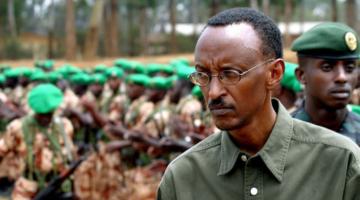 We revisit a discussion with Ann Garrison and the late Glen Ford about U.S. and human rights industrial complex support for Kagame in 2017.
 In the second part of a two-part interview, we speak with Raymond Nat Turner about his work and an upcoming performance with his group, Upsurge New York City, on April 13.
 The recent 2024 United National Antiwar Coalition conference brought together an international group of activists from member organizations who mobilize against imperialism, racism, and neo-…
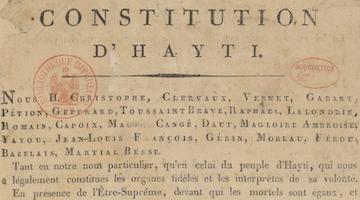 The 1805 Constitution of Hayti presents a far-reaching and radical vision for the nation – and demonstrates why Haiti must constantly fight for its sovereignty.


