New York City Mayor Zohran Mamdani celebrates with Democratic congressional candidate Darializa Avila Chevalier during an election night watch party on June 23, 2026, in New York City.Seth Wenig / AP Photo
Black political self-determination is always tenuous, even when Black people hold office. Now that DSA and other leftists are winning elections, the contradictions of Black politics are becoming more and more acute.
“Fear turns Black politics on its head.” - Glen Ford
As Black Agenda Report contributor Anthony Rogers-Wright recently reported, there is a new trope in leftist or perhaps leftish circles regarding Black voters. This new conventional wisdom says that Black voters are not on the left and are not supportive of the Democratic Socialists of America (DSA) and others in that wing of the party. It is said that Black voters are more conservative and prevent white leftists from winning. Not only are we being told that Black voters are responsible for stopping progressive victories but Black politicians have joined in and in one example of foolish behavior have implied that DSA is “white supremacist.” Establishment democrats, corporate media and others who do everything in their power to prevent even a small bit of liberal reform are now proclaiming that it is Black voters who stand in the way of bringing their own political desires into fruition.
The recent success of DSA candidates endorsed by New York City mayor Zohran Mamdani is the cause of this cynical and dishonest angst. The choices of Black voters often do not adhere to their political beliefs. Black people want a national health care system, strong labor protections, universal childcare, and an end to public money being spent on wars, all issues that are part of the DSA platform.
Yet Black voters will often cast their votes for candidates who do not share their values and the reasons are disheartening but not complicated. The Black vote is driven by fear and familiarity and shows a clear division by age, with older voters not straying far from the candidates who are presented to them by party leaders while younger voters are eager to see the issues they are interested in finally realized.
Black voters tend to be risk averse, and are reluctant to support a new face, just as Mamdani was when he ran in the Democratic Party primary in June of 2025. Former governor Andrew Cuomo received most of the Black vote at that time. Cuomo had name recognition as a three-term governor, even though he resigned from that office because of a sexual harassment scandal. He became governor in large part due to fond memories of his father, Mario Cuomo, who despite increasing the New York prison population by using federal money meant for housing, enjoyed wide popularity among most Black voters.
Yet age was the deciding factor in how Black voters made their decisions in that primary election.
Cuomo did well with Black voters older than 50, but Zohran Mamdani dominated with Black voters under the age of 50. Election analysis in this era of American politics has focused largely on race and education as dividing lines. However, age was the real split in this election, shaking up a lot of the dominant narratives about New York City voters in the process.
After his Democratic Party primary loss Cuomo was on the ballot on another line in November 2025 but he lost to Mamdani who in the intervening five months had made his case with many of those who had been unconvinced and won 61% of the Black vote. Mamdani’s primary victory did two things. One, it proved he was not a flash in the political pan but could win in the general election. Secondly, it also brought his platform to the attention of voters reluctant to venture outside of the politics they were familiar with. Black voters want universal child care and strengthened tenants rights and having been convinced that a Mamdani mayoralty was possible, voted in line with their politics.
In the June 2026 primary Mamdani’s endorsed candidates won races they were not expected to win and in so doing created anxiety for the Democratic Party establishment who saw two incumbent congressmen go down to defeat. In the ensuing reckoning, the Democratic Party donor class, the Black misleaders, and corporate media have piled on in a feeding frenzy of misinformation and nonsense.
In Black and Latino Leaders Ask What Do Socialist Wins Mean for New York the New York Times posited, “Longtime leaders and advocates in minority districts fear that victories by the Democratic Socialists of America in gentrifying neighborhoods could mean political erasure.” Socialist wins mean that tenants in rent regulated apartments benefited from a rent freeze recently announced by Mamdani. It means an expansion of universal pre-schools. These are things that Black people want. Why should Black officials be unhappy if their constituents get what they would like to see enacted in public policy? Why does the New York Times, rarely concerned with the fate of Black New Yorkers, now pretend to be worried about political changes caused by the gentrification they seldom mention in any way meaningful to Black people.
As for gentrification itself, Black Agenda Report has long warned that the lack of a plan for the cities would inevitably mean a loss of political power. Glen Ford explained in 2007 in his column “No Black Plans for the Cities, Despite the Lessons of Katrina.”
Now the fin de cycle is upon us. African Americans in general, and Black politicians in particular, seem to have never considered that the era of ‘chocolate cities’ might end, or the consequences to Black welfare and political power . . .Big Capital’s urban offensive threatens to irrevocably disperse the population base of Black political power, rendering forever moot all dreams of meaningful African American self-determination.
The same Black misleadership class which failed to name the beast of gentrification which depends upon the literal removal of Black people are suddenly aghast. They depend upon an electorate that will not venture far from who they already know and who are reluctant to vote for someone they don’t believe can win. They advocate for Black representation, regardless of how well the Black faces in high place work on behalf of their constituents. The end result is inertia, with Black faces in elected office but few of the changes that voters really want actually being realized.
It has been repeated over and over that DSA members are 85% white. There should be questions about that fact. How do Black activists involve themselves in the process? How do they organize? Do they organize solely within the electoral arena? What can Black people learn from these new formations? Instead of pondering these issues we are instructed to be mad that DSA organizes more effectively than people who have been in office for years.
On primary night a DSA crowd excited about their defeats of incumbents watched a video of Congressional Black Caucus member Hakeem Jeffries, Minority Leader of the House of Representatives, and chanted, “You’re next!”. Jeffries has become known by the moniker “AIPAC Shakur” due to his zealous support of zionism. Of course, only zionist stalwarts are allowed anywhere near leadership positions. Jeffries’ politics are hardly surprising.
There was a great deal of umbrage taken as the white crowd expressed their intentions of dethroning an establishment figure. On the X platform a reader said, “The optics of a mostly white crowd chanting ‘you're next’ to the likely First Black Speaker of the House aren't spectacular” to which this columnist replied, “An interesting point. There should be more Black people to the left of the Democratic Party establishment working to get rid of Jeffries and his ilk. A Black crowd chanting ‘You’re next!’ would be awesome.”
Social media jests aside, Jeffries is a party hack, which is precisely why he has his position. He does what the donors tell him to do, which is nothing remotely progressive or helpful to Black people. In fact, his job is to beat progressives down, and prevent them from doing anything that the funders don’t want to see enacted. Such is the power of representational politics, that people defend the likes of the Black misleaders who don’t deserve to be defended.
The New York Times article pointed to white gentrifiers as the problem and claimed that they are only interested in the war in Gaza, as if Black people aren’t interested in war crimes, and went on to say that Black “bread and butter” issues are being ignored. What is being ignored? Aren't tenant protections and rent freezes issues of concern?
The point of this essay is not to be a cheerleader for the DSA or Mamdani or for anyone else. It is to point out that the fears that drive Black voters do not serve their interests. All elected officials must be accountable and there is nothing that drives them to be accountable like the uncertainty that they will keep their seats. It is often said that white republicans represented by the MAGA movement vote against their interests. True, but they are not alone in that regard as Black voters, fearful of republican victory or even of democrats they don’t know, will not venture away from incumbents, regardless of how effective they may or may not be.
The rise of DSA is an indicator that the Democratic Party is losing legitimacy with millions of people, which is a good thing. But it is not a good thing for Black voters to be the last to leave the sinking ship. If the trend of demonizing DSA continues, Black people may be left out of the electoral arena altogether, and the politics of representation will be moot because there will be no representation at all.
The Times article dredged up high levels of nonsense, so much so that one Black elected official, Donovan Richards, the Borough President of Queens, responded to a post reiterating that DSA is almost entirely white with these words, “White supremacy comes in all forms” and followed up with a famous Malcolm X quote, “The white liberals are more dangerous than the conservatives.”
When AIPAC targeted Congressman Jamaal Bowman for defeat, the Black Democratic Party establishment said nothing, as a Brooklyn State Senator, Jabari Brisport, pointed out. The same people who went along when Bowman’s challenger had a $20 million campaign war chest, are now full of outrage if DSA challenges a Black incumbent.
Black Agenda Report has always stood in support of Black political self-determination, no easy task in a corrupt political system run by rich people and corporations who decide who can and cannot even run for office. There must be serious discussions that move beyond how many white people are in DSA. If nothing else, they have succeeded in organizing. Surely Black people are capable of doing the same thing in their own interest.
Over many years Black politics have devolved so much that there is little mention of political demands or even questions to be asked. The entire nation benefited from Black political organizing. That organizing ability did not die. It can be resurrected and it must be. It isn’t an exaggeration to say that Black politics, which is not necessarily the same as Black politicians, can improve the lives of millions of people. It is time to move ahead with boldness and to leave fear behind.
Margaret Kimberley is the author of Prejudential: Black America and the Presidents. You can support her work on Patreon and also find it on Twitter, Bluesky, and Telegram platforms. She can be reached via email at margaret.kimberley@blackagendareport.com.




 “...when I talk about our political institutions, there is no reason for any American to continue to be victimized by what we still refer to as the Republican and Democratic parties…We don’t have to…
 In commemoration of the Fidel Castro centenary on August 13, 2026, we present remarks given by Djibo Sobukwe at The Symposium on Fidel Castro and the Cuban Revolution on January 21, 2017,…
 Former Black Panther Deputy Minister of Defense Byron Booth's journey from Compton to Cuba, Algiers to Lagos, reveals the global reach of Black radicalism in a 2016 interview.
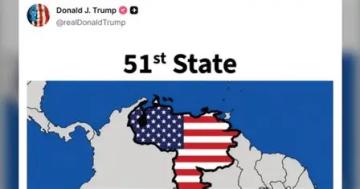 The U.S. is not shy about proclaiming its control of Venezuela and its resources.
 From boots on the ground to battles for the mind, an examination of the Pentagon's new psychological operations unit illustrates Washington's bid to reclaim influence in Africa.


