Women line up for aid distribution organized by the World Food Program in Kabul, Afghanistan. (Photo: Petros Giannakouris / AP)
United States "aid" to Afghanistan covers up the theft of that nation's assets and the resulting suffering of its population. The Black Alliance for Peace Afghanistan News Update explains.
Originally published in Black Alliance for Peace.
This month, the United States announced it will provide Afghanistan with $327 million in humanitarian assistance, largely funneled through federal agencies supervised by the U.S. State Department such as the U.S. Agency for International Development (USAID). While this may seem like a lot of money considering Washington’s failure to pass basic social and infrastructure policies for people in the United States, it’s only a fraction of the $7 billion in Afghan financial reserves the Federal Reserve Bank of New York illegally seized last year. Moreover, as with all USAID projects, “aid” is primarily used to serve U.S. economic and political interests. Finally, these funds will not ameliorate the damage tens of millions of Afghans are forced to endure from the devastating U.S./EU-led sanctions.
The contradictions in U.S. foreign policy, coordinated by the U.S./EU/NATO Axis of Domination, continue to sharpen. The Taliban’s regressive policies toward women are still being used to justify calls for U.S.-backed regime change in Afghanistan. Many seemingly well-meaning reports from popular outlets like Reuters, AP News, New York Times, Foreign Policy and the U.S. military’s own, Stars and Stripes, continue to push imperialist propaganda, justifying continued U.S. intervention in Afghanistan.
These outlets confuse the U.S. public as to who is primarily to blame for the humanitarian crisis in Afghanistan and erase the violent U.S. history there.
The Taliban continues to condemn the impact of the U.S.-led asset freeze and sanctions, along with a growing number of other countries, such as China and Russia. If conditions for all Afghans—including women, children and the rural poor—are to improve, it is clear the United States must end its war on Afghanistan as well as be held to account for its decades-long campaign of destruction and destabilization in the region.
ADDITIONAL READING
CEPR Sanctions Watch, August 2022
September 2, 2022, by Michael Galant for Center for Economic and Policy Research
Economic sanctions have become one of the main tools of U.S. foreign policy, evident in Afghanistan. The Biden administration continues to contribute to the collapse of Afghanistan’s economy and to the creation of one of the world’s worst humanitarian crises, collectively punishing tens of millions of Afghans.
The Weakness of US Empire & Defeat in Afghanistan: New Book by Vijay Prashad and Noam Chomsky
September 14, 2022, by BreakThrough News
Journalist and historian Vijay Prashad joins Brian Becker to break down how the United States is starving Afghanistan through sanctions and an asset freeze, explaining how the United States also hindered the development of a political left in Afghanistan throughout 40 years of interference and occupation. This continues today despite the United States being “withdrawn.”
The U.S. Response to the World’s Worst Humanitarian Crisis: Seize and Privatize
September 15, 2022, by Andrés Arauz for Center for Economic and Policy Research
About 70 percent of Afghan households are unable to meet their basic needs. In response, the Biden administration continues to freeze billions in Afghan cash and lead devastating sanctions, worsening Afghanistan’s humanitarian crisis. The former Central Bank General Director of Ecuador breaks down and relates Afghanistan's struggle with the U.S. foreign-asset freeze to the struggles of countries across Latin America and Africa.
U.S. Citizen Held Captive in Afghanistan for More Than 2 Years Is Released in Prisoner Swap
September 19, 2022, by Staff for CNN
Since the Taliban’s release of Mark Frerichs, there are no known U.S. prisoners in Afghanistan. The last POW, U.S. Army private Bowe Bergdahl, was released in 2014. Despite this, the United States continues to unlawfully imprison Afghan national Muhammad Rahim in Guantánamo. Rahim, who previously worked to eradicate opium poppies from Afghanistan, has been held in Guantánamo since the CIA illegally detained him in 2008.
Afghanistan’s Economic Calamity
August 15, 2022 by Felix Salmon for Axios
Mark Weisbrot, co-director for the Center for Economic and Policy Research, was quoted stating U.S. actions against Afghanistan could constitute a war crime under the UN’s Article 33.

 Senior care puts care workers into racialized, gendered, and age hierarchies, making it difficult for them to achieve social and economic mobility.
 I am hoping my call will provoke/inspire us to practice forms of life and liveliness differently.
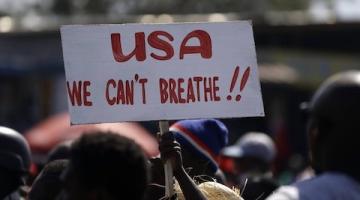 While Biden is telling Haitians “Don’t come over,” Haiti and its allies have been saying “U.S. Out of Haiti.”
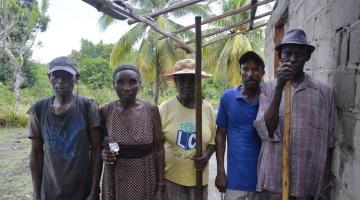 The author unpacks the tired trope of “poor rich Haiti,” highlighting the role of foreign capital and local elites in the destruction of life in the countryside.
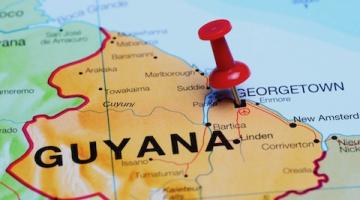 Guyana’s historically oppressed peoples direct their hostility at each other while neo-imperial powers hide in plain sight and reap the country’s wealth.


