The decolonization of Africa, and the determined activism of prominent African Catholics, played an important role in diversifying the church.
“Catholic claims to universalism and teachings on the dignity of man provided African believers with the tools to criticize the church’s ties to colonialism.”
In this series, we ask acclaimed authors to answer five questions about their book. This week’s featured author is Elizabeth Foster. Foster is Associate Professor of History at Tufts University. Her book is African Catholic: Decolonization and the Transformation of the Church.
Roberto Sirvent: How can your book help BAR readers understand the current political and social climate?
Elizabeth Foster: My book helps explain how the Catholic Church began a startling pivot at mid-century from being an institution that sent European missionaries all over the world to one whose fastest growth is now in Africa and Latin America. The scope of the transition in the space of just a couple of generations is astonishing. In 1958, there was still not a single black archbishop in the vast reaches of French colonial Africa. As of 2015 there were over a thousand African priests occupying pulpits in France, which no longer produces enough priests to serve its needs. My book shows how the decolonization of Africa, and the determined activism of prominent African Catholics, played an important role in diversifying the church.
What do you hope activists and community organizers will take away from reading your book?
My book features a number of African activists but the most prominent among them is Alioune Diop, the founder of the journal Présence africaine and the publishing house and bookstore of the same name, as well as the organizer of the groundbreaking international conferences on black culture in Paris in 1956 and in Rome in 1959. Yet despite all this, Diop is relatively unknown, especially in America. Born a Muslim in Senegal in 1910, Diop converted to Catholicism in 1944 and became one of the most influential voices in the postwar church, getting the ear of Popes John XXIII and Paul VI about making Catholicism less Eurocentric and more open to Africans and their cultures. Diop was devoted to the idea of dialogue throughout his life: between black artists and writers and their white counterparts, between Catholics and Muslims, between politicians and artists. He engaged in these dialogues himself, and drew other people into them, increasing exchange across divides of race and religion. Numerous contemporaries have described how wide his circle of friendship and acquaintance was, and how the most diverse groups of people would rub shoulders at his home, his bookstore, or the international conferences he organized. I think he is an inspiring model to those who are trying to figure out how to bridge the painful and frustrating divides in American society today, though he was operating in a Franco-African colonial context several decades ago.
We know readers will learn a lot from your book, but what do you hope readers will un-learn? In other words, is there a particular ideology you’re hoping to dismantle?
One thing that surprised me when I was doing my research was how radical many African Catholic students like the Burkinabé Joseph Ki-Zerbo were in the 1950s. The Association of African Catholic Students in France was the first African student group to declare its support for Algerian Independence, and the students argued publicly that France had a “duty” to decolonize. Historians have tended to assume that only African students with communist leanings were radicals, and that Catholics were invariably moderates with ties to the colonial system, but this book complicates that view. In the context of the French colonization of Africa, it is certainly true that many European Catholic missionaries aided and abetted the colonial regime while denigrating African cultures and disrupting African communities. Yet Catholic claims to universalism and teachings on the dignity of man also provided African believers with the tools to criticize the church’s ties to colonialism. They did so very effectively in the postwar period, ultimately influencing the Vatican to change its approach to the modern world at the Second Vatican Council.
Who are the intellectual heroes that inspire your work?
In terms of becoming a historian, it all goes back to wonderful teachers I had in school in both history and French language—particularly George and Barbara Barnett. It was really no accident that I became a scholar of history who uses French sources, even if I did not really know that is where I would end up, because of the joy of discovery and learning that they imparted to me. I try to keep that in mind in my own teaching, though I realize that most of my students will not go on to be historians! And while I was not really very aware of him before I wrote the book, I would place Alioune Diop (see #2 above) in my pantheon of heroes now. He did so much tireless and thankless work to further the work of black intellectuals and artists on the world stage, while colleagues like Léopold Senghor and Aimé Césaire got all of the accolades. He dealt calmly with the condescension of European intellectuals and politicians and outmaneuvered them time and again in their own terms and on their own turf. His was a truly remarkable life—I am thinking I may write a biography of him in the future, as there are none in English.
In what way does your book help us imagine new worlds?
To go back to something I pointed out above, I think it is remarkable how the Catholic Church, one of the oldest and most conservative institutions in the world, underwent such a major transformation in terms of its audience and its messaging in the latter half of the twentieth century. Sure, we can debate how sincere some of that messaging is today, and how far the needle has moved in some respects, but the church now is a far cry from what it was in 1950, both in Africa and worldwide. In the book I describe the racist, colonial milieu in which the first generation of francophone African prelates went to seminary and came up through the ranks in the 1940s and 1950s. It amazes me how recent that was. While I do not claim that the Catholic Church is perfect in this regard today (and I want to note that I am not Catholic, by the way), I am also encouraged by how things changed quickly and that gives me hope for some of the seemingly intractable problems in our society today. As a historian of both France and Africa, I often note how history seems to move in fits and starts—long periods of stasis can be overturned with rapid bursts of political, social, and cultural change.
Roberto Sirvent is Professor of Political and Social Ethics at Hope International University in Fullerton, CA. He also serves as the Outreach and Mentoring Coordinator for the Political Theology Network. He is co-author, with fellow BAR contributor Danny Haiphong, of the new book, American Exceptionalism and American Innocence: A People’s History of Fake News—From the Revolutionary War to the War on Terror.
COMMENTS?
Please join the conversation on Black Agenda Report's Facebook page at http://facebook.com/blackagendareport
Or, you can comment by emailing us at comments@blackagendareport.com


 The struggle against fascism must include a struggle against liberal democratic collaborators.
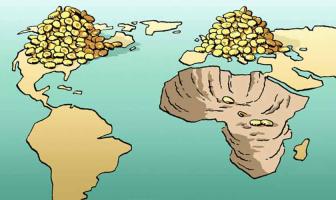 African Union member-states are facing a critical conjuncture as the looming threats of global conflict against imperialism threatens world peace.
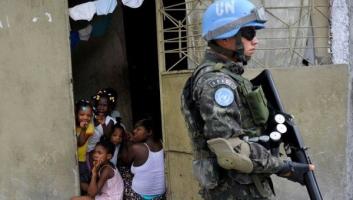 The recent re-election of Lula da Silva to the Brazilian presidency is a reminder of the role that he played in the occupation of Haiti. The Brazilian military took the lead in the occupation…
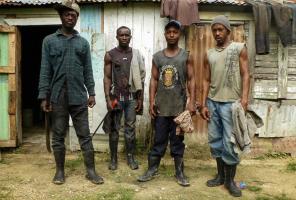 The US is complicit in allowing inhumane practices, including forced labor and wage theft among Haitian sugar industry workers in the Dominican Republic.
 The current calls to indict Russian authorities and citizens resemble what NATO did in 2011 to Libya and Muammar Gaddafi.


