Islam’s association in the West with “terror” makes it nearly impossible Islamic theology as a force for racial or social justice.
“Medieval Islamic theology was a pluralistic field of rich discussions full of original ideas.”
In this series, we ask acclaimed authors to answer five questions about their book. This week’s featured author is Aydogan Kars. Kars is a Lecturer in the Centre for Religious Studies and the Coordinator of the Islamic Studies Program at Monash University. His book isUnsaying God: Negative Theology in Medieval Islam.
Roberto Sirvent: How can your book help BAR readers understand the current political and social climate?
Aydogan Kars: We are living in a world where Islamic theology is depicted as a negative political power. Even in the academia, the phrase “political Islam” is often used interchangeably with “Islamism” making it very difficult, if not impossible, to imagine Islamic theology as a positive political force to contribute in gender justice, racial justice, or social justice, let alone in contemporary philosophical literature. Unsaying God is neither on politics nor liberation theology per se, but it does make a few points to inform this political and social climate. It shows that medieval Islamic theology was a rich field, with untapped intellectual resources still relevant to us. In the absence of a church, clergy, or consistent state regulation, Islamic theology was a pluralistic field of rich discussions full of original ideas. These ideas can inform contemporary philosophical discussions, such as post-structuralism, and constructive theology, as I explore in the conclusion part of the book. Hence, the book reclaims Islamic theology as a relevant discipline, with the hopes of making it available for those of us who insist on justice and liberation.
Unsaying God also shows that Islamic theological currents easily transcend religious and sectarian boundaries. This is quite significant in the current political and social climate, where Muslim - Jewish relations are viewed through the prism of the Israeli - Palestinian conflict. Such polarizing depictions not only feed both Islamophobia and Antisemitism, but they are also blatantly inaccurate, as the book demonstrates. Hence Unsaying God, as a book on shared medieval intellectual heritage, demonstrates that the polarizing depictions of Islamic theology in the current political and social climate is deeply problematic and historically ungrounded.
What do you hope activists and community organizers will take away from reading your book?
Unsaying God provides activists and community organizers with an in-depth exploration of self-negating, i.e., “apophatic” discourses on God that circulated among Muslims. The broadest take-away message for community organizers and activists is that Islamic theology has untapped resources to contribute in modern thought. For example, it can correct the common assumption that there is a single negative theological tradition in each religious tradition. Such assumptions not only overlook the intellectual exchanges between traditions, but also the diversity of possibilities of self-negating discourses as we find under Muslim rule. Islamic theology can converse with contemporary constructive theology, comparative religion, and modern philosophy, such as Derrida’s deconstructivism. Hence it is all but a dead discipline, and it has rich potentials to ground sacral defenses of justice and liberation.
The second take-away message would be that Islamic theology, like philosophy, was a field of wide influence that went beyond religious boundaries. The book reminds not only the significance of the shared Arabic heritage and the importance of the Judeo-Arabic language, but also the neglected fact that theological doctrines were often shared by Muslim and Jewish scholars. Of all the Jewish literary and spoken vernaculars of the post-talmudic period, Judeo-Arabic has had the longest recorded history, and the widest geographical diffusion in history: until early modern times, it was spoken by more people than any other Jewish language, as Norman Stillman reminds us. Hence I hope that the activists and community organizers will see theology as a discipline that can serve as a bridge between religions, rather than a divider.
We know readers will learn a lot from your book, but what do you hope readers will un-learn? In other words, is there a particular ideology you’re hoping to dismantle?
Unsaying God helps us unlearn two popular stereotypes regarding Islamic theology. First, it criticizes the common depictions of theology as a decisive marker of separation between religions, by proving that theological currents easily transcended these boundaries among Jews and Muslims. Hence Unsaying God rejects blatantly essentialist and historically ungrounded theories of “clash of civilizations” and their binaries, demonstrating that theologies were shared enterprises among religious traditions.
Second, in contrast to its unfair depictions as a field of futile debates on “how many angels can dance on the head of a pin,” Unsaying God displays that medieval theology was a rigorous and rich intellectual field. Today we tend to reduce the philosophical heritage of religions to a few philosophers, while religious traditions provide us with original ideas within their theological debates. Indeed, in the case of the Islamic thought, mainstream theologians were the heirs of the intellectual heritage of world-class philosophers like Avicenna (d.1037). Thus, my hope is that the book will help us dispel common misconceptions and prejudices about theology, Islamic theology in particular.
Who are the intellectual heroes that inspire your work?
As a student of intellectual history, I spend most of my life in medieval times, in conversation with my Sufi companions. Hence, it should be only normal if my primary intellectual heroes are my immediate friends, especially Ibn Arabi (d.1240), Hallaj (d.922), Rumi (d.1273), Attar (d.1221), Yunus Emre (d.1320), and Niffari (d.977). The book not only analyzes these medieval mystics, but also gets its inspiration and guidance from their lives and writings.
As an academic and citizen of Turkey, my most important contemporary intellectual heroes and companions are the Academics for Peace [Barış İçin Akademisyenler]. Founded in 2012 in the aftermath of a statement that supported Kurdish prisoners’ demands for peace in Turkey, the Academics for Peace has contributed to the production and dissemination of knowledge on topics like processes of peace and conflict, practices of peace-making, women’s role in the peace process, education in native languages and the destruction of the environment through war. In January 2016, together with more than a thousand prominent international scholars and activists, 2212 Academics for Peace signed the petition “We will not be a party to this crime!” which criticized the systematic and politically motivated violence exerted by the authoritarian Justice and Development Party government towards civilians in Kurdish-majority areas in Turkey. Since then, hundreds of them have been fired from their jobs, their passports have been confiscated, they were prevented from finding jobs, several were physically and verbally threatened, others were taken into custody, imprisoned, robbed from the right to work in the public sector through governmental decrees, and finally all of them are currently facing individualized court. Despite all this repression, threats and unending harassment a great majority of them have continued to stand behind their initial statement, resist, and collectively support each other. It is this relentless solidarity, despite the differences among them, and their solemn yet hopeful and prophetic insistence on peace and justice in expense of the “civil death” they have been facing, that make the Academics for Peace my intellectual heroes.
In what way does your book help us imagine new worlds?
My book imagines worlds where religious and secular thinking on infinity, or the absolute, can inform each other without any prejudice. So this would be a world where theology, philosophy, and mysticism, to borrow Ibn Arabi’s description, “are neighbors and visit each other,” rather than appearing as mutually exclusive and hostile disciplines.
Unsaying God also imagines worlds of justice, liberation, and diversity, where scholars and activists of different religious and cultural backgrounds can easily bring their intellectual heritage in conversation with others. In such a world, religious, cultural, racial, gender, and sexual differences would co-exist, and provide with new opportunities to enrich our experiences, rather than creating binaries or hierarchies. In the language of my medieval companions, this is a world of “unity in diversity and diversity in unity” [wahda fi’l-kathra wa kathra fi’l-wahda] as described in the Qur’an 5:48:
“To every one of you We have appointed a right way and an open road. If God had willed, He would have made you one community; but [He willed otherwise] that He may try you in which He has given you. So vie with another in good deeds; unto God shall you return all together; and He will inform you of that wherein you differ.”
Roberto Sirvent is Professor of Political and Social Ethics at Hope International University in Fullerton, CA. He also serves as the Outreach and Mentoring Coordinator for the Political Theology Network. He is co-author, with fellow BAR contributor Danny Haiphong, of the new book, American Exceptionalism and American Innocence: A People’s History of Fake News—From the Revolutionary War to the War on Terror.
COMMENTS?
Please join the conversation on Black Agenda Report's Facebook page at http://facebook.com/blackagendareport
Or, you can comment by emailing us at comments@blackagendareport.com

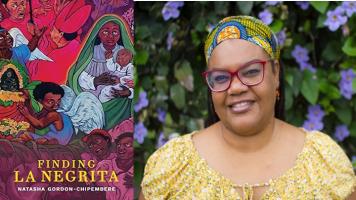 This week’s featured author is Natasha Gordon-Chipembere. Gordon-Chipembere holds a PhD in English from the University of South Africa. She was born in New York to a Costa Rican mom and a Panamanian…
 The author makes the case that liberalism is a dead end and that socialism is the only tool for Black liberation.
 Colia Clark was a veteran of the Black Liberation Movement who worked with Medgar Evers, who was also affiliated with the NAACP and who served as Executive Secretary of the Student Non-Violent…
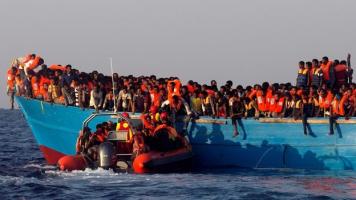 Imperialist wars and capitalist predation have accelerated the pace of migration from North African nations. The climate crisis worsens structural inequality between the global south…
 Developing countries and mass organizations at the COP17 summit continue to demand compensation for damage and loss created by fossil fuel production in industrialized capitalist nations. The…


