Black Agenda Report
Black Agenda Report
News, commentary and analysis from the black left.

  • Home
  • Africa
  • African America
  • Education
  • Environment
  • International
  • Media and Culture
  • Political Economy
  • Radio
  • US Politics
  • War and Empire

Angola: 22 killed during mass protests against fuel prices
Nicholas Mwangi
06 Aug 2025
🖨️ Print Article
Taxi drivers protest
Taxi drivers protest increase in fuel prices in Angola. Photo: X

Angola, one of Africa’s top oil producers, is in turmoil after protests erupted over a sharp fuel price hike driven by IMF-backed subsidy cuts.

Originally published in People's Dispatch.

A three-day strike by taxi drivers in Angola against the rise in fuel prices escalated into widespread protests across the country. The protests were met with heavy repression by the Angolan security forces that left at least 22 people dead (with some reports claiming an even higher number), hundreds injured, and more than 1,200 detained, according to civil society groups and media reports.

The unrest was fueled by the government’s decision to raise the price of petrol by 33% from 300 to 400 kwanzas (€0.29 to €0.38) per liter as part of a phased removal of fuel subsidies. The move, effective from July 1, is part of economic reforms encouraged by the International Monetary Fund (IMF), which has pressured the Angolan government to reduce public spending on fuel subsidies and redirect funds toward health and education. Fuel subsidies accounted for ~4% of GDP in 2024, and are projected to fall to around 1.8% in 2025.

However, in a country where more than a third of the population lives on less than USD 2.15 a day, and where the unemployment rate stands at 14.5%, the removal of subsidies has intensified public frustration. Inflation currently sits at 27.5%, and over 80% of the employed population works in the informal sector, earning meager wages.

Taxi and public transport operators raised fares in response to the hike, affecting ordinary citizens who rely on public transport for their daily commutes. What began as a strike by transport workers quickly turned into large-scale anti-government protests, as thousands took to the streets in Luanda and other major cities.

In several areas, security forces reportedly used live ammunition and tear gas to disperse crowds. The United Nations Human Rights Office spokesperson expressed grave concern over the state’s response.

“Authorities in Angola must carry out prompt, thorough, and independent investigations into the deaths of at least 22 people, as well as associated human rights violations,” said a spokesperson from the UN Human Rights Office. “Unverified footage suggests that security forces used live ammunition and tear gas to disperse protesters, which points to an unnecessary and disproportionate use of force.”

The protests are the latest expression of public anger in Angola, a country that paradoxically remains one of Africa’s largest oil producers. As oil exports generate billions in revenue, ordinary citizens see little to no benefit in their daily lives, and the population struggles with poverty, inequality, and chronic unemployment, particularly among the youth.

The government has so far defended the subsidy cuts as necessary for long-term economic stability. But with living costs rising and household incomes shrinking, many Angolans feel the IMF-driven austerity reforms are being implemented at the expense of the most vulnerable, as the removal of fuel and food subsidies will see a sharp increase in living costs, fuel, transport, and food. Without social protections and targeted welfare programs, such reforms risk sparking even more social unrest in countries already burdened by inequality and economic fragility, with Angola as a clear testament to this.

Across the continent, IMF conditions have stirred widespread resistance. In Kenya, for example, the Finance Bill 2024, introduced in line with the IMF’s fiscal consolidation demands, triggered a wave of nationwide protests beginning in June 2024, driven largely by young people. The bill proposed sharp tax hikes including on bread, sanitary products, and digital services and was seen by many as unjust, burdensome, and regressive. As in Angola, Kenyans questioned why basic goods were becoming more expensive in a country with abundant resources and rising external debt.

Angola
protest
IMF

Do you need and appreciate Black Agenda Report articles? Please click on the DONATE icon, and help us out, if you can.


Related Stories

Nicholas Mwangi
Youth-led anti-corruption movement surges in The Gambia
06 August 2025
Gambians from all walks of life – led by the youth-driven GALA movement mobilized across the country on July 23 in an anti-corruption protest a

Abayomi Azikiwe
Kenyan Police Attack Youth-led Demonstrations Against Brutality
09 July 2025
At least 16 were killed in protests marking the first anniversary of mass actions against neo-liberal tax hikes and continuing state repression
Dylan Sullivan , Jason Hickel
Plundering Africa – Income Deflation and Unequal Ecological Exchange Under Structural Adjustment Programmes
12 March 2025
Presenting new research, Dylan Sullivan and Jason Hickel mount a devastating critique of the impact of structural adjustment in Africa in the 1

Pavan Kulkarni
67 Killed in Stampedes at Christmas Food Drives in Nigeria as IMF-Induced Hunger Engulfed Millions More in 2024
15 January 2025
After dozens died in stampedes, Nigerian President Bola Tinubu remarked, “We should just get on with it.” Tinubu’s IMF-prescribed policies have
Joel Mukisa
The problem is systemic: understanding the #OccupyParliament movement in Kenya
09 October 2024
Reflecting on the mass protests that recently shook Kenyan society from top to bottom, Joel Mukisa argues that we must go much further than a c
Salvador Ousmane
Nigerian government unleashes massive repression after #endhunger protests
25 September 2024
At the beginning of August this year, tens of thousands of Nigerians rose up to denounce the government in a movement that was organised under
Ann Garrison, BAR Contributing Editor
Rwanda's Stillborn Middle-Income Economy
10 July 2024
Rwanda’s economic miracle is a lie.
Black Alliance For Peace
Responsibility for the Kenya Crisis Lies At the Feet of US Neo-Colonialism
10 July 2024
The current uprising in Kenya is a result of the imperialist economic policy enabled and maintained by its comprador leader, William Ruto.
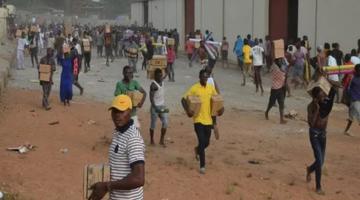
Residents looting a warehouse in Nigeria
Pavan Kulkarni
Looting of Food Grains Continues in Nigeria as Almost Half its Population Suffers Hunger
17 April 2024
President Bola Tinubu’s lifting of fuel subsidies and liberalization of currency trade has pleased the IMF and increased hunger in Africa’s mos
Escaping Debt Slavery: Ethiopia, Africa, and the IMF
Ann Garrison, BAR Contributing Editor
Escaping Debt Slavery: Ethiopia, Africa, and the IMF
17 May 2023
In 1987, at the Organization for African Unity, Thomas Sankara said, "Debt is a cleverly managed reconquest of Africa." Ethiopia might act

More Stories


  • Barack Obama
    Black Agenda Radio with Margaret Kimberley
    Obama Scolds While Harris Implodes
    25 Oct 2024
    Dr. Anthony Monteiro joins us to discuss the latest twists and turns of the 2024 presidential election. Barack Obama felt compelled to scold Black men, while Kamala Harris talked endlessly about…
  • Martinique protest
    Black Agenda Radio with Margaret Kimberley
    Martinique's History of Resistance
    25 Oct 2024
    Roddy Rod is an anti-Kepone activist, pan-African, anti-imperialism resident of Martinique. He is also a resident of the African nation the Ivory Coast. He joins us to discuss recent protests in…
  • Margaret Kimberley, BAR Executive Editor and Senior Columnist
    The U.S. Continues Its Terror Campaign Against Cuba
    23 Oct 2024
    The ongoing U.S./Israeli genocide has diverted attention away from other crimes. The electricity crisis in Cuba is but one example of how the U.S. determination to dominate has created suffering…
  • Editors, The Black Agenda Review
    POEM: The Earth Is Closing On Us, Mahmoud Darwish, 1995
    23 Oct 2024
    “Where should we go after the last frontiers? Where should the birds fly after the last sky?”
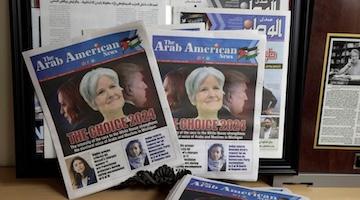
  • Ann Garrison, BAR Contributing Editor
    New York Times Attacks “Peace-peddling” Jill Stein as the Presidential Race Comes Down to the Wire
    23 Oct 2024
    The New York Times scapegoats Green Party presidential candidate Dr. Jill Stein as polls indicate a dead heat between Donald Trump and Kamala Harris.

  • Load More
Subscribe
connect with us
about us
contact us

