Former DIA analyst Ana Belén Montes was imprisoned for 20 years for sharing intelligence with Cuba that helped it prevent US attacks and sabotage. Upon being released, she condemned the “suffocating embargo” that makes Cubans “suffer.”
This article was originally published in Geopolitical Economy Report.
A former intelligence analyst who was imprisoned by the United States government for 20 years for sharing information with Cuba that helped it prevent US attacks against it was freed this January.
Upon leaving prison, she condemned the six-decade-long US blockade of Cuba and called for more attention to the hardships endured by the Puerto Rican people.
“Who in the last 60 years has asked the Cuban people if they want the United States to impose a suffocating embargo on them that makes them suffer?” she asked.
Ana Belén Montes had been an official at the US Defense Intelligence Agency (DIA). She worked her way up the ranks of the organization, becoming its top Cuba analyst, before she was arrested in 2001.
In 2002, Montes was sentenced to 25 years in prison.
She was convicted of secretly giving sensitive intelligence to Cuba, helping its revolutionary government prevent US terror attacks and disrupt US sabotage operations.
At her trial, Montes declared, “I obeyed my conscience rather than the law… giving the island [Cuba] classified information to help it defend itself.”
“I believe our government’s policy towards Cuba is cruel and unfair, profoundly unneighborly, and I felt morally obligated to help the island defend itself from our efforts to impose our values and our political system on it,” she said.
The US Department of Defense, where Montes worked, had a history of planning terror attacks on Cuba. In Operation Northwood in 1962, top US military officials discussed launching false-flag attacks on civilian targets in both Cuba and Florida and falsely blaming them on communists, to try to justify a US military invasion of the island.
Montes is a national hero in Cuba, and many around the world considered her to be a prisoner of conscience.
On January 6, 2023, US authorities allowed Montes to leave prison, having served 20 or her 25 year-sentence. But she is not yet completely free; the US government is going to monitor Montes for the remaining five years, and all of her internet access will be closely followed.
Soon after her release, Montes published a statement stating, “I encourage those who want to focus on me to, instead, focus on important issues, such as the serious problems that the Puerto Rican people face, or the United States economic embargo against Cuba.”
“Who in the last 60 years has asked the Cuban people if they want the United States to impose a suffocating embargo on them that makes them suffer?” she added.
The international community overwhelmingly opposes the illegal US blockade against Cuba, and every year for decades more than 95% of member states at the United Nations have voted to condemn it.
The US State Department admitted in an internal cable in 1960 that its goal in imposing sanctions and eventually an embargo on Cuba was “to weaken the economic life of Cuba” and make “the greatest inroads in denying money and supplies to Cuba, to decrease monetary and real wages, to bring about hunger, desperation and overthrow of government.”
Montes is Puerto Rican, and upon being released she moved back to her homeland. There, she delivered these remarks (emphasis added):
"I am happier than ever to touch Boricuan soil again. After two quite exhausting decades, and with the need to go back to earning a living, I would like to dedicate myself to a quiet and private existence. Therefore, I will not participate in any media activities.
I encourage those who want to focus on me to, instead, focus on important issues, such as the serious problems that the Puerto Rican people face, or the United States economic embargo against Cuba.
Who in the last 60 years has asked the Cuban people if they want the United States to impose a suffocating embargo on them that makes them suffer?
What also deserves attention is the urgent need for global cooperation that stops and reverses the destruction of our environment.
I as a person am irrelevant. I am not important, while there exist grave problems in our world homeland that demand attention and a demonstration of brotherly love."
Her lawyer, Linda Backiel, said that this would be Montes’ only public statement and that she would not grant interviews, asking for her privacy to be respected.
Addressing the court at her trial in October 2002, Montes delivered a passionate speech (emphasis added):
An Italian proverb perhaps best describes the fundamental truth I believe in: “All the world is one country.”
In such a “world-country,” the principle of loving one’s neighbor as much as oneself seems, to me, to be the essential guide to harmonious relations between all of our “nation-neighborhoods.”
This principle urges tolerance and understanding for the different ways of others. It asks that we treat other nations the way we wish to be treated – with respect and compassion. It is a principle that, tragically, I believe we have never applied to Cuba.
Your honor, I engaged in the activity that brought me before you because I obeyed my conscience rather than the law.
I believe our government’s policy towards Cuba is cruel and unfair, profoundly unneighborly, and I felt morally obligated to help the island defend itself from our efforts to impose our values and our political system on it.
We have displayed intolerance and contempt towards Cuba for most of the last four decades. We have never respected Cuba’s right to make its own journey towards its own ideals of equality and justice.
I do not understand why we must continue to dictate how the Cubans should select their leaders, who their leaders cannot be, and what laws are appropriate in their land.
Why can’t we let Cuba pursue its own internal journey, as the United States has been doing for over two centuries?
My way of responding to our Cuba policy may have been morally wrong. Perhaps Cuba’s right to exist free of political and economic coercion did not justify giving the island classified information to help it defend itself. I can only say that I did what I thought right to counter a grave injustice.
My greatest desire is to see amicable relations emerge between the United States and Cuba. I hope my case in some way will encourage our government to abandon its hostility towards Cuba and to work with Havana in a spirit of tolerance, mutual respect, and understanding.
Today we see more clearly than ever that intolerance and hatred – by individuals or governments – spread only pain and suffering.
I hope for a U.S. policy that is based instead on neighborly love, a policy that recognizes that Cuba, like any nation, wants to be treated with dignity and not with contempt. Such a policy would bring our government back in harmony with the compassion and generosity of the American people.
It would allow Cubans and Americans to learn from and share with each other. It would enable Cuba to drop its defensive measures and experiment more easily with changes. And it would permit the two neighbors to work together and with other nations to promote tolerance and cooperation in our one “world-country,” in our only “world-homeland.”
Ben Norton is an investigative journalist and analyst. He is the founder and editor of Geopolitical Economy Report, and is based in Latin America. (Publicaciones en español aquí.)

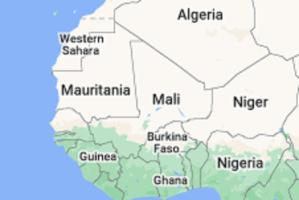 The government of Mali has accused France of numerous violations of its airspace and has requested that the United Nations Security Council investigate. French forces may have left Mali, but the…
 This article was written on the occasion of the sixth summit between the European Union and the African Union which was held in Brussels on 17 and 18 of February 2022. These meetings are…
 The history and significance of Black August, presidential elections and politics in Kenya, and reflections on the anniversary of the Sandinista Revolution.
 Kalonji Changa is co-founder of Black Power Media and founder of FTP Movement. He joins us from Atlanta to talk about Black August, which has been a fixture of the liberation movement for 43 years.
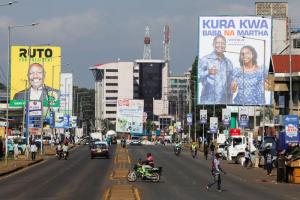 Irene Asuwa joins us from Nairobi, Kenya. She is co-convener of Ecological Justice and supports outreach at Ukombozi Library. We discuss the recent presidential election in that country.


