by Danny Haiphong
Africa – it’s natural resources and the labor of its people – built the economies of the West, which has no intention of leaving. The West drains Africa of hundreds of billions each year, while strangling its nations in debt. The U.S. military occupies much of the continent. “The movement against racism and class warfare in the US must defend Africa from imperialist attack and condemn US imperialism wherever it rears its head on the continent.”
The Centrality of Africa in the Class Struggle to Come
by Danny Haiphong
“The long history of solidarity between the Black liberation movement and Pan-Africanism should inform the struggle today.”
The continent of Africa has been kept a mystery to most people inside of the US. Since its inception, US imperialism has suppressed past and present developments on the African continent. The suppression of Africa’s history and development gave political cover for the West to reap enormous profit and infrastructural development from of the trade of Africans. Once Africans ceased existing as a commodity of slaves, the continent's large reserves of natural resources caught the attention of US imperialism. US imperialism replaced Europe after World War II as the primary arbiter of neo-colonialism on the continent, thus cementing Africa's centrality to the struggle for self-determination and social revolution inside of the US.
US imperial influence in Africa is multifaceted and starts first and foremost with economic strangulation. US-led "international" organizations such as the International Monetary Fund (IMF) have forced the majority of Africa's people into a relationship of dependence with Western capital. US and Western imperialism havs shoved debt disguised as aid down the throat of Sub Saharan Africa to the tune of 134 billion USD annually. Yet nearly 200 billion USD per year in assets are looted from the continent, leaving the majority of African people impoverished. Africa’s dependency on the West is fueled by aid agreements that include Structural Adjustment Plans (SAP). SAPs require African nations receiving aid to make drastic cuts to healthcare, education, and infrastructure in order to guarantee repayment of debt to lending institutions.
“US imperialism replaced Europe after World War II as the primary arbiter of neo-colonialism on the continent.”
Africa has provided the imperialist system with 1.7 trillion dollars worth of capital outflow since 1970 as a result of these predatory lending policies. However, the majority of African people on the continent continue to live under conditions of poverty. These conditions could not exist without compliant, US-friendly regimes. All over the continent, the US imperialism has provided political cover for brutal strongmen of neo-colonialism. In Rwanda and Uganda, the US has sponsored regimes involved in a proxy war against the resource rich Democratic Republic of Congo. Since 1996, over 6 million Congolese have been killed at the hands of Rwandan and Ugandan-backed mercenaries.
This is but one instance of what has become a general trend on the African continent. US imperialism has expanded its footprint in Africa in recent years to compete with China's growing economic influence. The US, being in economic decline itself, has primarily done so through the prism of the military. Just prior to George W. Bush's departure from office, the US African Command was formed. AFRICOM, for short, was expanded under Obama's rule and now has presence in 51 of 53 African nations.
The consequences of US military expansion in Africa have been devastating. Compliant, neo-colonial regimes have aided the US military through the expansion of drone operations, especially in the nation of Djibouti. In 2011, US imperialism overthrew Muammar Gaddafi in Libya. His proposed idea for a unified African monetary bank that dealt in gold ultimately threatened the hegemony of Washington in Africa. Libya under Gaddafi was one of the last remaining nations to both oppose Western financial strangulation as well as US military occupation in Africa. Since the overthrow of Libya’s sovereign government, there has been a proliferation in terrorist attacks that have spread the tentacles of instability throughout the entire region.
“US imperialism has expanded its footprint in Africa in recent years to compete with China's growing economic influence.”
The plan for Africa, contrary to AFRICOM's mission statement, is not regional stability but statelessness. US imperialism has done everything possible to keep Africa in a constant state of hunger, poverty, and underdevelopment through military means. AFRICOM has infiltrated African military forces so they can be deployed to halt China-Africa relations and keep Africa's natural resources firmly in the grip of US and Western capital. Coups and proxy wars will thus continue with regularity under the supervision of the US military. AFRICOM's expansion directly threatens any hope for self-determination and continental integration.
US expansion into Africa has only deepened the connection between the class struggle in the US and the liberation of Africa. Without a stronger anti-imperialist movement in the US and West, the imperialist states will continue to possess a great degree of freedom to employ resources toward the domination of the African continent. Furthermore, African resistance and liberation movements will continue to inform and instruct not only the future of the African continent, but also the futures of all peoples fighting to break the chains of imperialism.
Historically, this has manifested itself in the deep ties between the Pan-African movement in Africa and the Black liberation movement in the US. African liberation fighter Kwame Nkrumah shared a close relationship with Black liberation fighters Shirley and WEB Du Bois as well as Martin Luther King Jr. and Malcolm X. Each visited Ghana in solidarity with Nkrumah's leadership in organizing a united and independent Africa. WEB Du Bois spent his last days living in Ghana free of US anti-communist repression. Later in the century, the Black Panther Party went a step further by actualizing its internationalist political orientation with the formation of chapters throughout the world. Its largest international chapter resided in Algeria.
“Libya under Gaddafi was one of the last remaining nations to both oppose Western financial strangulation as well as US military occupation in Africa.”
The long history of solidarity between the Black liberation movement and Pan-Africanism should inform the struggle today. As African nations become more entangled in the web of US imperialism, the class struggle in both the US and Africa will become more entangled as well. This requires a movement that can organize around the day to day issues of the exploited in the US mainland and at the same explain these problems from an internationalist perspective. Zimbabwe and Eritrea are critical in this regard. Both nations remain steadfast in their opposition to AFRICOM. Despite their achievements, both nations suffer mightily from US sponsored sanctions. The movement against racism and class warfare in the US must defend these sovereign African countries from imperialist attack and condemn US imperialism wherever it rears its head on the continent as a whole.
The development of such a movement will require a great deal of education. Africa's centrality to the imperialist world economy over the last several hundred years has made it a target of the most viscous campaign of misinformation known to human history. For many in the US and West, Africa is nothing but an uncivilized land that deserves the suffering its people have been forced to experience. Even worse, Western thought has attempted to erase Africa's existence from the consciousness of people in the West all together. Only class struggle armed with the imperative to eliminate the vulgarity of the imperialist mind can begin to reserve this trend.
Danny Haiphong is an Asian activist and political analyst in the Boston area. He can be reached at wakeupriseup1990@gmail.com.

 Jacqueline Luqman was a panelist on the February 16, 2023 webinar Why and How to End the War in Ukraine, which was sponsored by Chicago Area Peace Action. These were her remarks.
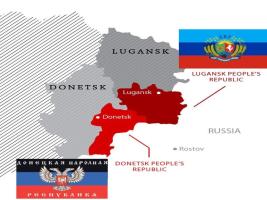 Ajamu Baraka argued that the Ukrainian crisis was a “manufactured crisis” primarily created by the miscalculations of policy-makers in the U.S. and Western Europe who were blinded by the prospect of…
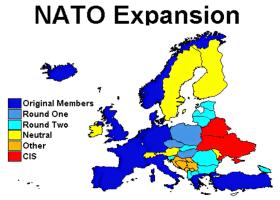 According to Dr. Gerald Horne, greed and shortsightedness convinced the U.S. that it could achieve the strategic objectives of undermining German economic power by controlling the European market,…
 February is the designated month to honor presidents, but Black people should know better than to believe what they are told about any benevolence on the part of George Washington, Abraham…
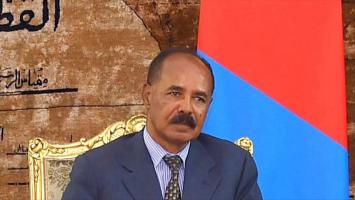 The president of Eritrea gives a wide ranging interview on the U.S. regime change effort against neighboring nation Ethiopia using the TPLF, and long-standing U.S. hostility towards his country.


