by Thomas C. Mountain
Eritrea, a small African nation on the Red Sea, is surrounded by sectarian religious strife, yet maintains a remarkable amity and unity among its various peoples. Roughly half Christian and half Muslim, Eritrea shuns military alliances and economic dependency on the West. To keep the peace, the government makes sure that “no Da'esh or Pat Robertson ‘born again’ foreign funded religious centers are allowed.”
An Afar Wedding in Eritrea
by Thomas C. Mountain
“We have too many enemies outside our country; we just don't want anything to do with religious fanaticism.”
Recently our Afar neighbors in Massawa, Eritrea, had a wedding for their daughter next door to us. Being Afar (as in the Afar Desert where the earliest human ancestors have been found), an entirely Islamic nationality, the wedding next door was a “girl wedding,” and as such traditionally attended by the women from both sides of the family.
The boy’s family had the “boy’s wedding” attended traditionally by the men from both families.
Living in ethnically and religiously mixed neighborhoods in Massawa several different ethnic groups or tribes were present, and the music which started out Afar quickly spread to Tigre, Tigrinia, and Saho. As the night grew late, the DJ rolled out the hits, almost entirely Tigre and Tigrinia, both Muslim and Christian music.
“Religious and ethnic tolerance is the rule rather than the exception.”
Being a Muslim wedding, no alcohol was served, not even “sua,” a traditional form of beer made from kitcha, flat bread. But the men attending, with women from the neighborhood attending the “boy wedding” as well, simply walked around the corner to the nearest bar for a drink.
In today’s Eritrea religious and ethnic tolerance is the rule rather than the exception. Muslims and Christians party together, though Halal is observed and special goats are slaughtered for Christian consumption and vice versa for Christian weddings.
In Eritrea a Christian girl can marry a Muslim boy without upsetting the families in any major way, something that has been practiced for many centuries past.
These days with Eritrean children going to school together, attending the National Sawa Educational Center their 12th year of schooling, and fighting and dying together in the trenches defending their country from the Ethiopian invaders, ie June, 2016 in Tsorona, there is little room for religious fanaticism. The people just wont tolerate it, never mind the proactive stance of the government which enforces religious respect, ie no Da'esh or Pat Robertson “born again” foreign funded religious centers allowed.
“There is little room for religious fanaticism.”
Dancing together at a wedding, all mixed regardless of sex, age, religion, tribe, to the beat of nationalist songs praising the sacrifice all families have made in the struggle to win and defend Eritrean independence brings an almost spiritual sense of unity. A happiness, joy really, that while dancing with your neighbors brings feelings of brother and sisterhood that are shared amongst one and all. “Forget all your troubles and dance...Forget all your sorrows and dance...Forget all your weakness and dance...” we are Eritreans and proud, no matter our religious or tribal differences.
With 9 different ethnic groups in our country religious and ethnic harmony cannot be taken for granted. We have too many enemies outside our country scheming up ways to divide and conquer, and with all the problems our neighbors are having, we just don't want anything to do with religious fanaticism.
If our neighbor’s Eritrean Afar wedding is anything to go by Eritreans lead the way in “just getting along,” living together and respecting each others differences, practicing “Hade Libee,” “one heart” as we say when we raise a toast to our country’s independence.
Thomas C. Mountain is an independent journalist in Eritrea, living and reporting from here since 2006. See Facebook at thomascmountain or thomascmountain at g mail dot com

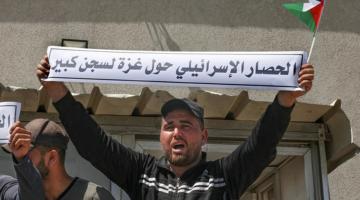 Three years into Israel's genocide in Gaza, the consequences of a decision driven by siege, settlement expansion, and assaults on Al-Aqsa are still unfolding.
 In this week’s segment we hear about the right-wing politics of the anti-migrant movement in South Africa, ANC failures, and upcoming elections in that country. But we begin with the first and only…
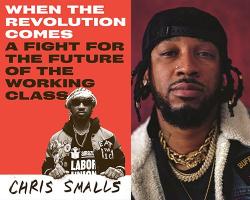 Chris Smalls discusses his memoir, "When the Revolution Comes: A Fight for the Future of the Working Class," published by Penguin Random House. He is the first and only union leader to successfully…
 Our guest is Nairobi based political writer and strategist Clinton Nzala. He joins us to provide an update and an analysis of the South African anti-migrant March and March movement, which is…
 The Hague Group’s goal is to “. . . take coordinated legal and diplomatic measures against Israel’s violations of international law.” But international law was never a reality.


